Wednesday, February 16, 2022

#JamesDonaldson On #MentalHealth - #JeremyGiambi’s Death Suspected To Be #Suicide
By 

Jeremy Layton

Officials suspect that #JeremyGiambi, who passed away at the age of 47 Wednesday, died by #suicide, according to TMZ.

Law enforcement officials received a call at 11:40 a.m. Wednesday and found the ex-MLB player deceased at his family home. Few additional details have been released.

Giambi played for six seasons in the #MLB from 1998 to 2003 for the Royals, Phillies, Red Sox and A’s — the latter alongside his brother Jason, a five-time All-Star. Jeremy was traded from Oakland in 2002, which was dramatized in the film “Moneyball.”

Jeremy Giambi with the A’s

Giambi played for six seasons in the MLB.

He hit 52 home runs throughout his career and had 209 RBIs.

He hit 52 home runs throughout his career and had 209 RBIs. Perhaps his most famous moment came when he was thrown out at the plate in Game 3 of the 2001 ALDS by Derek Jeter during the “flip play,” in which Jeter miraculously appeared to relay the ball to home plate after the cutoff man was missed.

Giambi’s agent, Joel Wolfe, said Wednesday that his family requested “that we all respect their privacy during this difficult time.”

#JamesDonaldson notes:

Welcome to the “next chapter” of my life… being a voice and an advocate for #mentalhealthawarenessandsuicideprevention, especially pertaining to our younger generation of students and student-athletes.

Getting men to speak up and reach out for help and assistance is one of my passions. Us men need to not suffer in silence or drown our sorrows in alcohol, hang out at bars and strip joints, or get involved with drug use.

Having gone through a recent bout of #depression and #suicidalthoughts myself, I realize now, that I can make a huge difference in the lives of so many by sharing my story, and by sharing various resources I come across as I work in this space.  #http://bit.ly/JamesMentalHealthArticle

Giambi’s time in Oakland was referenced in the movie “Moneyball.”
https://standingabovethecrowd.com/?p=8831

Tuesday, February 15, 2022

Learn More About James Donaldson Click Here
About James Donaldson, Author of Standing Above The Crowd and Celebrating Your Gift of Life

To Order Your Copy of Standing Above The CrowdClick Here

To Order Your Personally Signed Copy of Celebrating Your Gift of LifeClick Here

James Donaldson is a Washington State University graduate (’79). After an outstanding basketball career with WSU, he went on to play professional basketball in the NBA with the Seattle Supersonics, San Diego/L.A. Clippers, Dallas Mavericks, New York Knicks, and Utah Jazz. He also played for several teams in the European Leagues in Spain, Italy, and Greece, and he toured with The Harlem Globetrotters to wrap up his career. James was an NBA All-Star in 1988 while playing center for the Dallas Mavericks. In 2006, James was inducted into the Pac-10 Sports Hall of Fame and also the Washington State University Athletic Hall of Fame. In 2010, James was elected as a board member for the NBA Retired Players Association.

James established The Donaldson Clinic in January 1990 - 2018 (shortly after a career-threatening knee injury) with the idea that he would eventually become a physical therapist. He is a strong advocate for Women & Minority owned businesses and is very involved with various Chambers of Commerce. He understands what it takes to sustain a strong business environment that is conducive to the success of businesses overall. He also serves as a coach for other small business owners.

Today, James devotes the majority of his time to various community activities and to the operations of The Donaldson Clinic which he closed in 2018. James frequently conducts speaking engagements (motivational, inspirational, educational) for organizations, schools, and youth groups.

In 2009, James was a candidate for the office of Mayor for the City of Seattle. He had a strong fourth place finish in a crowded field of eight candidates. It was the first time James ran for an elected office in the world of politics, and he continues to work closely with several elected officials in regards to politics, youth, and educational issues in Seattle.

In 2010, James was the recipient of the NBA Legends of Basketball ABC Award, awarded for outstanding contributions in Athletics–Business–Community.

Currently, James is a director in China with the China Service Center for Friendship and Cooperation with Foreign Countries Studying Abroad Department in which he assists in helping students with various study abroad and cultural exchange programs.

James is a long-time resident of the Greater Seattle area. He believes in being a role model for success and professionalism to the scores of young people to whom he devotes so much of his time. He currently serves on several boards and committees and is a member of many organizations.

James believes in developing relationships that create a “Win-Win” environment for everyone involved, and in being the best he can be!

For more information about James Donaldson or to request he speak at your event, contact him at:


www.StandingAboveTheCrowd.com

JamesD@StandingAboveTheCrowd.com

1-800-745-3161 (voicemail & fax)
https://standingabovethecrowd.com/about/
#JamesDonaldson On #MentalHealth - More #Kids Hospitalized For #SuicideAttempts, Some Blame Remote Learning
By Rebecca Duffy

QUINCY (WGEM) - New research shows a big jump in emergency room visits for #children with #suicideattempts.

According to the #NationalInstituteofMentalHealth, the number of #teenage #girls admitted saw a 50 percent increase from 2019 to this year, with remote learning being a factor.

Many #schools were in a fully-remote or hybrid learning mode from March of 2020 through last #school year.

Tara Hamann with Transitions of Western Illinois, who deals with #mentalhealth, said the lack of face-to-face interaction caused more #students to feel depressed.

“One of the big key factors that we notice is that there is a decline in their social relationships. They disengage. They quit spending time with them. And so when I think that naturally gets taken away from them, as the #pandemic did, I think it creates feelings of #depression,” she said.

Quincy #HighSchool has #counselors, #psychologists, and a #school social worker to make sure #students are in a good place mentally to stay in #school.

QHS social worker Morgan Fox said it does not surprise her that remote learning is a factor, as she’s seen a lot of #students struggling this school year.

“#School is obviously a lot about academics, but it’s also about social-emotional learning and socializing with your peers so being out of #school for that long doesn’t surprise me that #students are struggling,” Fox said.

#JamesDonaldson notes:

Welcome to the “next chapter” of my life… being a voice and an advocate for #mentalhealthawarenessandsuicideprevention, especially pertaining to our younger generation of students and student-athletes.

Getting men to speak up and reach out for help and assistance is one of my passions. Us men need to not suffer in silence or drown our sorrows in alcohol, hang out at bars and strip joints, or get involved with drug use.

Having gone through a recent bout of #depression and #suicidalthoughts myself, I realize now, that I can make a huge difference in the lives of so many by sharing my story, and by sharing various resources I come across as I work in this space.  #http://bit.ly/JamesMentalHealthArticle

Hamann said for some #students, going back to in-person learning after being virtual has also been an issue for their #mentalhealth.

“Now that all of those things are being thrown back in, trying to manage all of those things, and the social aspect of it, so I think that it creates a lot of #anxiety and pressure,” Hamann said.

Hamann said Transitions screens people in a #psychiatric crisis to see if they’d be better served in a hospital setting.

She said they have screened around 700 people this year, many who were kids struggling with issues related to the #pandemic.

Fox said while they respect #student confidentiality, if a #student is severely struggling and might attempt #suicide, their #parents will be notified.

If you need help, or know someone who does, call the #NationalSuicidePreventionHotline at 1(800) 273-8255.

Copyright 2021 WGEM. All rights reserved.
https://standingabovethecrowd.com/2022/02/jamesdonaldson-on-mentalhealth-more-kids-hospitalized-for-suicideattempts-some-blame-remote-learning/

Monday, February 14, 2022

#JamesDonaldson On #MentalHealth - Protecting Young People’s #MentalHealth In The #SocialMedia Era
BY MERCEDES WILLIAMS AND CASEY BORTNICK

The U.S. Surgeon General is raising the alarm over young people's #mentalhealth. He's issued an advisory calling for swift action to respond to what he calls a growing crisis.

The surgeon general’s office says the number of #teens who had a major depressive episode nearly doubled between 2010 and 2019. The number of high schoolers who seriously contemplated #suicide rose nearly six percent during that same time.

During a visit to a #highschool this week, Dr. Vivek Murthy emphasized that these numbers were from before the #pandemic and things have gotten worse.

"We've had rates of #suicide increase among our #children, and for many kids during the #pandemic feelings of #anxiety and #depression worsened, and #loneliness as well," Dr. Murthy said.

Dr. Murthy says it would be a tragedy for us to beat back one public health crisis to only allow another to grow in its place.

The surgeon general says #socialmedia activity is also contributing to the issue. While connecting online can be helpful to some, what we're exposed to can be just as hurtful. It's why Congress has been focusing on #socialmedia, specifically #Instagram, and the impact on young users.

#JamesDonaldson notes:

Welcome to the “next chapter” of my life… being a voice and an advocate for #mentalhealthawarenessandsuicideprevention, especially pertaining to our younger generation of students and student-athletes.

Getting men to speak up and reach out for help and assistance is one of my passions. Us men need to not suffer in silence or drown our sorrows in alcohol, hang out at bars and strip joints, or get involved with drug use.

Having gone through a recent bout of #depression and #suicidalthoughts myself, I realize now, that I can make a huge difference in the lives of so many by sharing my story, and by sharing various resources I come across as I work in this space.  #http://bit.ly/JamesMentalHealthArticle

A whistleblower says that the social network's own research showed #Instagram to be toxic for #teen #girls, leading to body image issues and even suicidal thoughts.

This week, the head of #Instagram faced the senate to defend the company.

"Your company viewed losing #teen users as an existential threat, whereas #parents are viewing their kid’s addictions to your product and other products as an existential threat to their family. The #parent knows best for their #teens so the appropriate amount of time should be a decision by the #parent about a specific #teen," Sen. Amy Klobuchar said.

#Instagram leaders suggest that there should be an industry body that comes up with best practices when it comes to safety.

Along with pressure from senators, a bipartisan group of state attorney's general launched an investigation into the potential harms of #Instagram for #children and #teens. The company claims the allegations are false.

Spectrum News 1 recently spoke with a New York #psychiatrist, who said its possible prolonged exposure to #socialmedia can lead to #anxiety, #depression and other issues. But that not all #socialmedia is bad.

Moderation is key and it’s on #parents to be part of the solution and set limits on their child’s screen time.

“You know your kid if your kid can, you know, tolerate looking at other people's videos and know kind of what's attainable what's not attainable,” Crystal Run Health #Psychiatrist Lisa Batson said. “Okay great, I mean they shouldn't still be on it all the time, but they might not be as much of an issue as somebody that's a little bit more insecure and more affected by that.”

This week #Instagram also rolled out a new tool called "Take a Break." It includes an alert that users can turn on after using the app for a certain amount of time. The goal is to make it easier for people, especially #teens to spend less time on the platform.
https://standingabovethecrowd.com/2022/02/jamesdonaldson-on-mentalhealth-protecting-young-peoples-mentalhealth-in-the-socialmedia-era/
#JamesDonaldson On #MentalHealth - Protecting Young People’s #MentalHealth In The #SocialMedia Era
BY MERCEDES WILLIAMS AND CASEY BORTNICK

The U.S. Surgeon General is raising the alarm over young people's #mentalhealth. He's issued an advisory calling for swift action to respond to what he calls a growing crisis.

The surgeon general’s office says the number of #teens who had a major depressive episode nearly doubled between 2010 and 2019. The number of high schoolers who seriously contemplated #suicide rose nearly six percent during that same time.

During a visit to a #highschool this week, Dr. Vivek Murthy emphasized that these numbers were from before the #pandemic and things have gotten worse.

"We've had rates of #suicide increase among our #children, and for many kids during the #pandemic feelings of #anxiety and #depression worsened, and #loneliness as well," Dr. Murthy said.

Dr. Murthy says it would be a tragedy for us to beat back one public health crisis to only allow another to grow in its place.

The surgeon general says #socialmedia activity is also contributing to the issue. While connecting online can be helpful to some, what we're exposed to can be just as hurtful. It's why Congress has been focusing on #socialmedia, specifically #Instagram, and the impact on young users.

#JamesDonaldson notes:

Welcome to the “next chapter” of my life… being a voice and an advocate for #mentalhealthawarenessandsuicideprevention, especially pertaining to our younger generation of students and student-athletes.

Getting men to speak up and reach out for help and assistance is one of my passions. Us men need to not suffer in silence or drown our sorrows in alcohol, hang out at bars and strip joints, or get involved with drug use.

Having gone through a recent bout of #depression and #suicidalthoughts myself, I realize now, that I can make a huge difference in the lives of so many by sharing my story, and by sharing various resources I come across as I work in this space.  #http://bit.ly/JamesMentalHealthArticle

A whistleblower says that the social network's own research showed #Instagram to be toxic for #teen #girls, leading to body image issues and even suicidal thoughts.

This week, the head of #Instagram faced the senate to defend the company.

"Your company viewed losing #teen users as an existential threat, whereas #parents are viewing their kid’s addictions to your product and other products as an existential threat to their family. The #parent knows best for their #teens so the appropriate amount of time should be a decision by the #parent about a specific #teen," Sen. Amy Klobuchar said.

#Instagram leaders suggest that there should be an industry body that comes up with best practices when it comes to safety.

Along with pressure from senators, a bipartisan group of state attorney's general launched an investigation into the potential harms of #Instagram for #children and #teens. The company claims the allegations are false.

Spectrum News 1 recently spoke with a New York #psychiatrist, who said its possible prolonged exposure to #socialmedia can lead to #anxiety, #depression and other issues. But that not all #socialmedia is bad.

Moderation is key and it’s on #parents to be part of the solution and set limits on their child’s screen time.

“You know your kid if your kid can, you know, tolerate looking at other people's videos and know kind of what's attainable what's not attainable,” Crystal Run Health #Psychiatrist Lisa Batson said. “Okay great, I mean they shouldn't still be on it all the time, but they might not be as much of an issue as somebody that's a little bit more insecure and more affected by that.”

This week #Instagram also rolled out a new tool called "Take a Break." It includes an alert that users can turn on after using the app for a certain amount of time. The goal is to make it easier for people, especially #teens to spend less time on the platform.
https://standingabovethecrowd.com/?p=8812
#JamesDonaldson On #MentalHealth - Protecting Young People’s #MentalHealth In The #SocialMedia Era
BY MERCEDES WILLIAMS AND CASEY BORTNICK

The U.S. Surgeon General is raising the alarm over young people's #mentalhealth. He's issued an advisory calling for swift action to respond to what he calls a growing crisis.

The surgeon general’s office says the number of #teens who had a major depressive episode nearly doubled between 2010 and 2019. The number of high schoolers who seriously contemplated #suicide rose nearly six percent during that same time.

During a visit to a #highschool this week, Dr. Vivek Murthy emphasized that these numbers were from before the #pandemic and things have gotten worse.

"We've had rates of #suicide increase among our #children, and for many kids during the #pandemic feelings of #anxiety and #depression worsened, and #loneliness as well," Dr. Murthy said.

Dr. Murthy says it would be a tragedy for us to beat back one public health crisis to only allow another to grow in its place.

The surgeon general says #socialmedia activity is also contributing to the issue. While connecting online can be helpful to some, what we're exposed to can be just as hurtful. It's why Congress has been focusing on #socialmedia, specifically #Instagram, and the impact on young users.

#JamesDonaldson notes:

Welcome to the “next chapter” of my life… being a voice and an advocate for #mentalhealthawarenessandsuicideprevention, especially pertaining to our younger generation of students and student-athletes.

Getting men to speak up and reach out for help and assistance is one of my passions. Us men need to not suffer in silence or drown our sorrows in alcohol, hang out at bars and strip joints, or get involved with drug use.

Having gone through a recent bout of #depression and #suicidalthoughts myself, I realize now, that I can make a huge difference in the lives of so many by sharing my story, and by sharing various resources I come across as I work in this space.  #http://bit.ly/JamesMentalHealthArticle

A whistleblower says that the social network's own research showed #Instagram to be toxic for #teen #girls, leading to body image issues and even suicidal thoughts.

This week, the head of #Instagram faced the senate to defend the company.

"Your company viewed losing #teen users as an existential threat, whereas #parents are viewing their kid’s addictions to your product and other products as an existential threat to their family. The #parent knows best for their #teens so the appropriate amount of time should be a decision by the #parent about a specific #teen," Sen. Amy Klobuchar said.

#Instagram leaders suggest that there should be an industry body that comes up with best practices when it comes to safety.

Along with pressure from senators, a bipartisan group of state attorney's general launched an investigation into the potential harms of #Instagram for #children and #teens. The company claims the allegations are false.

Spectrum News 1 recently spoke with a New York #psychiatrist, who said its possible prolonged exposure to #socialmedia can lead to #anxiety, #depression and other issues. But that not all #socialmedia is bad.

Moderation is key and it’s on #parents to be part of the solution and set limits on their child’s screen time.

“You know your kid if your kid can, you know, tolerate looking at other people's videos and know kind of what's attainable what's not attainable,” Crystal Run Health #Psychiatrist Lisa Batson said. “Okay great, I mean they shouldn't still be on it all the time, but they might not be as much of an issue as somebody that's a little bit more insecure and more affected by that.”

This week #Instagram also rolled out a new tool called "Take a Break." It includes an alert that users can turn on after using the app for a certain amount of time. The goal is to make it easier for people, especially #teens to spend less time on the platform.
https://standingabovethecrowd.com/?p=8812

Sunday, February 13, 2022

#JamesDonaldson On #MentalHealth - What We Misunderstand About #Suicide Among #Black #Americans
Jamie Ducharme

- #CheslieKryst
- American lawyer, Miss USA 2019

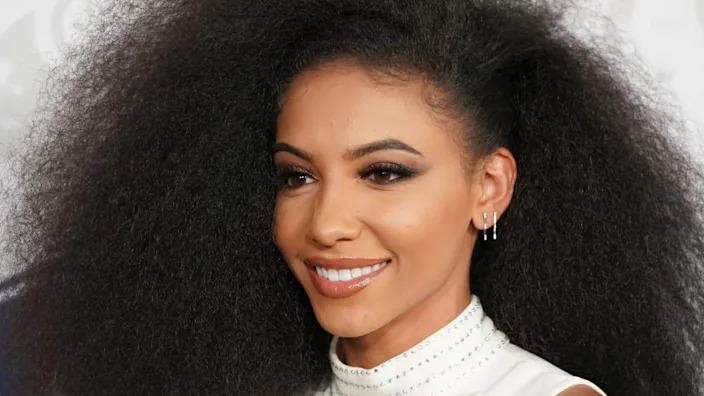
Cheslie Kryst Visits "Extra"

#CheslieKryst in New York's Times Square on Nov. 18, 2019

It’s an idea that in one form or another has been repeated again and again. #CheslieKryst had so much. She seemed so happy. She didn’t fit the mold of someone who dies by #suicide.

Kryst, an entertainment reporter, former lawyer, and #MissUSA 2019, was a successful young #Black #woman in a country that often assumes #suicide primarily affects white, visibly depressed middle-aged men, the Willy Lomans who populate #American culture. So the shock that followed news of her death Sunday—which the New York medical examiner confirmed to be caused by #suicide—was predictable. It also revealed a dangerous gap between reality and what many believe about #suicide and prevention in the #UnitedStates.

It’s true that, in raw numbers, white #men account for more #suicide deaths in the U.S. than any other demographic group. But that obscures a more complicated picture. #Suicide rates are actually highest among #American #Indian/Alaska Native people, according to U.S. #CentersforDiseaseControlandPrevention (#CDC) data—something rarely mentioned in conversations about #suicide. What’s more, the most recent #CDC data available suggest that, following years of increases across demographic groups, #suicide rates among white people in the U.S. declined from 2019 to 2020, contributing to a 3% overall drop in #suicide deaths in that time period. But there were no statistically significant declines in #suicide rates for #Black #Americans, or other #Americans of color; in fact, for some #racial or #ethnic groups, rates increased from 2019 to 2020. Among #Black #youth and young #adults in particular, #suicide rates have climbed steadily over the past two decades.

When a high-profile, successful, young #Black #woman like Kryst dies by #suicide, “these things are brought to the limelight of the public,” says Michelle Vance, an assistant professor of social work and sociology at the North Carolina Agricultural and Technical State University who recently co-authored a paper on #suicide among #Black #women. “But these things are happening every single day in our communities.”

Misunderstanding the ways in which #suicide affects #Americans of color can lead to confusion—not just among members of the public, grieving family, and friends, but also practitioners who may be used to assessing #suiciderisk through a lens of whiteness, Vance says. Frequently, as has been the case in the days after Kryst’s death, inaccurate ideas about #suicide and suicidal thinking are repeated, potentially contributing to future situations in which those at risk go unnoticed by peers and professionals alike.

“I’ve been searching my brain thinking, What did I miss? What did I not see?” CBS This Morning host Gayle King, who was a mentor and friend to Kryst, told TIME, recalling a final conversation the two shared in December. “How could I miss the signs? There were no signs. That’s the truth.”

#CheslieKryst and her mother, moments after Kryst was crowned #MissUSA 2019, in Reno, Nev., on May 2, 2019

That mismatch between presentation and risk is not uncommon, says Rheeda Walker, a clinical #psychologist and professor of #psychology who directs the University of Houston’s Culture Risk and Resilience Lab. (Those who know someone who dies by #suicide, particularly someone who masked their pain or did not comport with common ideas about #mentalhealthcrisis, often feel guilty, Walker says, but should give themselves some grace as they grieve. Prevention is a long-term activity, rarely possible in the final crisis.)

“She was a very high-functioning individual. So people assume. She doesn’t present like someone who is depressed and downtrodden,” Walker says. “But two things come to mind for me: When we work with clinical #patients, oftentimes the ones who are least depressed are the ones actually who give me the most pause…. The other thing is that people oftentimes don’t look like what they are going through.”

While #suicide has long been viewed as an affliction of middle age, among #peopleofcolor in the #UnitedStates, those 30 and under are at greatest risk. And warning signs of #suicide risk may show up differently in younger populations and across #racial and #ethnic groups. As Lillian Polanco-Roman, an associate professor of #psychology at the New School for Social Research, points out, data that compare #suicide rates among older populations suggest that fewer #Black people die by #suicide, as if there were something guarding them from it, while failing to capture the reality of what is happening before people reach that age.

“The narrative, how it has been spun before is ‘oh, #communitiesofcolor have this protective factor,’” she says. But in fact, “those who are most vulnerable…they’re not caught by our safety nets. They don’t get that extension in life to make it to middle age.”

#JamesDonaldson notes:

Welcome to the “next chapter” of my life… being a voice and an advocate for #mentalhealthawarenessandsuicideprevention, especially pertaining to our younger generation of students and student-athletes.

Getting men to speak up and reach out for help and assistance is one of my passions. Us men need to not suffer in silence or drown our sorrows in alcohol, hang out at bars and strip joints, or get involved with drug use.

Having gone through a recent bout of #depression and #suicidalthoughts myself, I realize now, that I can make a huge difference in the lives of so many by sharing my story, and by sharing various resources I come across as I work in this space.  #http://bit.ly/JamesMentalHealthArticle


#CheslieKryst and her mother.

A research letter published in 2021 found that, from 2014 to 2019, #suicide rates among #Black people in the U.S. increased by 30%, even as rates among white people began to drop by the end of that time period. Among #children, the trends have been even more startling, especially among #Black #girls, for whom #suicide death rates increased by 182% from 2001 to 2017, according to a study published in 2019. #Suicideattempts among #Black #youth of all genders have also grown more frequent in recent years, according to a 2019 study published in Pediatrics.

A delay in statistical reporting makes it difficult to say with authority how the #pandemic may have affected the situation. Still, some studies help fill in the gaps. For example, an international 2021 research review incorporating data from 54 studies concluded that suicidal thinking and #behavior has become more common during the #pandemic than before it, particularly among young people and #women. Studies have also shown that rates of #depression and #anxiety—both of which are considered risk factors for #suicide—were higher in 2021 versus 2020, particularly among #peopleofcolor. According to #CDC data from January and February 2021, more than 41% of U.S. #adults said they’d felt symptoms of #depression or #anxiety in the past week, compared to 36% in the summer of 2020. What’s more, 47% of #Hispanic/#Latino #adults and nearly 45% for #Black #adults said they’d experienced recent #depression or #anxiety in the 2021 survey.

Another paper, published in the Lancet Regional Health—Americas, found that almost a third of U.S. #adults reported elevated symptoms of #depression in the spring of 2021. Depressive signs were most common among people in low-income households and those who experienced multiple stressors related to the #COVID-19 #pandemic, such as job loss or death of a loved one. Those stressors have not been equally distributed: In the early days of the #pandemic in particular, #peopleofcolor in the U.S. died from #COVID-19 at significantly higher rates than white people. As of June 2020, 31% of #Black #Americans and 17% of #Hispanic #Americans said they knew someone who had died from #COVID-19, compared to just 9% of white #Americans. And as of May 2021, about 40% of #Black #adults said someone in their household had lost a job or wages due to the #pandemic.

It would be easy to say that changes in #suiciderisk in the #BlackAmerica have crept up on the country, Polanco-Roman says. But research going back decades showed an increase in #suicide among young #Black #men from the 1960s to the 1990s, followed by a decade-long decrease and stabilization—and then, in the 2000s, another increase among all groups, with a disproportionate share of the growth occurring among younger #Latino, #Native, #Asian, and #BlackAmericans. Even before the #pandemic, #suicide risk among #peopleofcolor in the #UnitedStates was concentrated among the young. (In fact, Polanco-Roman notes, the data for #Americans of color look more like those for #suicide risk in low- and middle-income countries in #LatinAmerica and #Africa, where rates are highest among young people—suggesting that those countries may be a valuable source of information and guidance.)

“Culture, environment influences #suicide risk,” says Polanco-Roman, “That, I think, is recognized. But to what extent and in what ways, we still need more research.”

Limited research and understanding of these facts may be causing public health officials and the general public to fritter away opportunities to intervene and keep young people of color alive.

Research informs treatment, public health interventions and even what the public understands about #suicide risk. In the #UnitedStates there’s been significant conversation about firearms access and #suicide risk, for example; that focus may help to save the lives of middle-aged #men in particular, who are more likely to die after using a firearm. But young #Americans who die by #suicide are more likely to use other methods, which have not received the same level of attention.

It’s no coincidence that efforts to prevent #suicide in #Blackcommunities remain less effective than they could be.

“We are working on improving our #suicideprevention strategies, and our #suicide intervention, but we are not centering other lived experiences, namely those who are not white,” says Polanco-Roman. “Our prevention strategies are not culturally responsive. They’re most responsive to white populations, who are better represented in the research that we carry out.”

The assumption that #suicide can be addressed in universal ways is one problem. Systemic #racism also plays a significant role in the failures of #suicideprevention. It shapes who has access to quality #mentalhealthservices, and other social resources such as education, quality housing, and employment, as well as who is exposed to violence, unemployment, hunger, abuse and other chronic stressors that compromise #mentalhealth and development over the course of a person’s life.

#Suicide is highly complex phenomenon. Though people who die by #suicide may experience traumatic experiences leading up to their deaths, there is rarely a single cause or trigger; some people may not even exhibit what most consider visible warning signs. Still, #suicide is preventable with the right mixture of interventions and ongoing support. The #AmericanPsychiatricAssociation has found that access to mental and physical health care is a buffer against suicidal thinking and #behavior, along with social and community support.

It is particularly devastating, then, that in the U.S., #mentalhealthcare is least accessible to #peopleofcolor, who are known to face a disproportionate amount of #stress and trauma. As of 2019, about 20% of the white U.S. #adult population received #mentalhealthcare, while less than 10% of #adults identifying as #Black, #Hispanic, #Asian, or Pacific Islander/Native Hawaiian did. (Interestingly, 7.1% of white #Americans still said they had an unmet #mentalhealth need, a higher percentage than any other single #racial or #ethnic group.) Research has also shown that #children and #teenagers of color are less likely to have received #mentalhealthcare before dying by #suicide, compared to white #youth.

The #pandemic did little to eliminate those disparities. While the rise of teletherapy helped some people connect with a #mentalhealthpractitioner for the first time, relatively high earners and white people reported the largest jumps in telehealth usage through spring 2021. Whether online or in person, care is still out of reach to many people due to cost, difficulty finding providers who accept insurance, and a glaring lack of clinicians of color, to name only a few barriers.

“Socioeconomic status is not the whole story,” says Dr. Amanda Calhoun, a psychiatry resident affiliated with the Yale School of Medicine. There are plenty of #peopleofcolor who can easily find and afford treatment. Finding a therapist who understands their lived experience and “what it is to be a person of color in America” is much harder—not only because psychiatry is a predominantly white field, but also because medical schools offer limited training on the intersection of #race and #mentalhealth, Calhoun says. “You could be alienating many #Black people who have the means to access the #mentalhealth system, but they frankly don’t trust it,” she says. That will likely continue to be the case until the medical system learns to attract people from all backgrounds and offer comprehensive training that goes beyond the experiences of white #Americans.

These are not inherently intractable social phenomena beyond human control. They are the results of decisions made about research funding, housing, education, food, health care, and other policies. When the #pandemic arrived in a country that made those decisions, it rendered the #suiciderisk mitigation strategies that involve our private lives, rather than clinical settings, all the more important. For Black women, research suggests that list of #mentalhealth protections includes things like close personal ties, hugging, and frequent physical contact with family and friends, Walker says. Church attendance or maintaining a spiritual practice and sense of belonging or connection to a community. The ability to go to happy hour with coworkers and talk about a boss who hands out discrimination as often as assignments. But in the #pandemic, much of that became physically dangerous.

“It really is multi-layered,” Walker says. “Why I do the work that I do is that people habituate to this pain. A lot of folks are struggling. But most folks aren’t going to try to take their lives. And for me I know that it’s because of what we call protective factors, the psychological buffers. It’s all of that that usually provides this kind of layer of protection.”

Some of those layers were already eroding before the #pandemic, Walker says. And that’s something worth talking about and working to repair, she says. That’s a form of public health work, stuff that keeps people alive. It’s also practical and in the individual’s control.

“I don’t think we can do much about the other risk factors in the short term,” Walker says. “You know, between #racism and microaggressions, what you gon’ do?”

#CheslieKryst was a #woman with a bachelor’s degree, a law degree, and an MBA. She practiced law and did pro bono work that ultimately liberated a man convicted of drug charges from a life prison sentence. She served as #MissUSA and unapologetically appeared on stage with natural, curly hair and a more muscular body—shaped by years as a Division I college athlete—than the typical pageant contestant. She then switched careers and quickly won two Daytime Emmy awards. “She was a sparkle. I called her walking sunshine,” Gayle King says.

#MissUSA #CheslieKryst walks on stage during the 2019 #MissUniverse pageant at the Tyler Perry Studios in Atlanta on Dec. 8, 2019.

Kryst had also publicly described talking with a counselor and exercise as essential to her #mentalhealth; in a statement released on Wednesday, her mother said she was living with “high-functioning #depression,” a term that the University of Houston’s Walker says is not a precise medical diagnosis but an apt way to describe real pain that the sufferer is able to mask. Beyond that, there is much we do not know and cannot know about Kryst’s experiences.

What we do know is that the effects of overlapping #racism and #sexism may amplify stressful experiences. In some cases, they become risk factors for #suicidalbehavior, Vance and her co-author Jeannette Wade, an assistant professor of sociology at North Carolina Agricultural and Technical State University, concluded in their recent paper, published in the Journal of Racial and Ethnic Health Disparities. “When you take the idea of being a #Black #woman and having to live in a #sexist society, a #racist society, and then add things like having to head a household…that is creating a unique risk,” Wade says.

At the same time, #Black #women are often expected in their friend and family circles to operate like unshakable trees planted beside the water, deeply-rooted and able to weather any storm, Walker says. And the way that #racism and #sexism combine often forces these same women to present themselves publicly as not only unflappable, but capable of superhuman feats. It’s what a society like this one requires of them simply to be regarded as fully human by others.

One of the most widely cited theories of #suicide—known as Joiner’s theory, named for the clinical #psychologist who developed it—holds that three things are consistently present among those who die by #suicide, Walker says. The first is the sense that one does not belong. The second is the individual feels or believes themselves to be a burden to others. The third is the capacity to overcome the powerful human instinct to survive, the ability to intentionally and seriously injure oneself. But those factors are not always the only considerations: Subsequent research that Walker, Jasmin R. Brooks, and others conducted affirmed a relationship between the capacity for suicide and a habituation to pain or risk. But for #Black #adults, experiences with discrimination were more predictive than the risk-taking or ability to tolerate physical pain.

Walker emphasizes that she does not know Kryst or any details of her life beyond what Kryst made publicly available. But what Kryst did share is likely familiar to many of those who come from similar backgrounds, and points toward some of the findings of Walker’s joint research: In various forums, Kryst described frequent experiences with microaggressions, outright #racism, #sexism, and society’s fading interest in #women over the age of 30. She also, Walker notes, described the way that, at what appeared to be wonderful moments in her life, online commenters sometimes told Kryst to kill herself.

To Walker, the many public appeals since Kryst’s death for those who are suffering to reach out to others for help are yet another one of those prevalent but dangerously inexact ideas about #suicide and prevention. What’s needed is for all of us to take the initiative. Consider those around us. Reach out when we see or even suspect someone we know is experiencing something difficult or painful. Do not presume that a person is OK or would ask for help if needed. Do not assume a person’s race or age or outward demonstrations of happiness mean they don’t need to know someone cares, to be listened to rather than hushed with bromides and reflexive, relentless #American positivity.

#Suicide is stigmatized and difficult to talk about. But studies—albeit, many focused on white people—have repeatedly shown that asking someone whether they have considered #suicide does not increase their risk of planning or attempting it, and may help get them into treatment. In some cases, difficult conversations may be lifesaving.

“I talk about a psychological fortitude rating, 0 to 10, 10 being the highest,” Walker says. “And some of us are operating at 6 and lower.
https://standingabovethecrowd.com/2022/02/jamesdonaldson-on-mentalhealth-what-we-misunderstand-about-suicide-among-black-americans/