Wednesday, July 5, 2023

#JamesDonaldson On #MentalHealth – The #Kids Aren't Alright: What Is Behind An Epidemic Of #Child And #Teen #Suicide?

#JamesDonaldson On #MentalHealth – The #Kids Aren't Alright: What Is Behind An Epidemic Of #Child And #Teen #Suicide?

Rates of #depression, #suicide in people under 18 have increased over two decades


Divorce and Children

Jeff Zide, Staff Writer


MANISTEE — After two and a half years of a worldwide #pandemic, many #children and #teens are going back to #school for the first time. Even in non-#pandemic times, going back to #school could be an exciting and tumultuous time for #children and #teens.


The #pandemic has only accelerated a #mentalhealthcrisis among #youth that is decades in the making. The University of California, Davis on its health website, stated that "the rate of #suicide for those ages 10 to 24 increased nearly 60% between 2007 and 2018, according to the #CentersforDiseaseControlandPrevention. The #CDC reported that #suicide was the second leading cause of death among people ages 10-34 in 2018."


In addition, the Journal of the #AmericanMedicalAssociation in a research letter found that "Georgia, Indiana, New Jersey, Oklahoma and Virginia had an increase in absolute count of #adolescent #suicides during the #pandemic. These states, along with California, also had an increase in the proportion of overall suicides among #adolescents." The letter also stated that when the data was collected from 14 states that participated in the study, "the proportion of overall suicides among #adolescents increased during the #pandemic. No other #pandemic-period changes in adolescent outcomes were statistically significant."


One local #therapist in Manistee has also seen the effects of rising rates of #suicide and #mentalhealthissues among #teens, both pre-#pandemic and over the past two and half years of the #COVID-19 #pandemic. 


#James Donaldson notes:
Welcome to the “next chapter” of my life… being a voice and an advocate for #mentalhealthawarenessandsuicideprevention, especially pertaining to our younger generation of students and student-athletes.
Getting men to speak up and reach out for help and assistance is one of my passions. Us men need to not suffer in silence or drown our sorrows in alcohol, hang out at bars and strip joints, or get involved with drug use.
Having gone through a recent bout of #depression and #suicidalthoughts myself, I realize now, that I can make a huge difference in the lives of so many by sharing my story, and by sharing various resources I come across as I work in this space.
  #http://bit.ly/JamesMentalHealthArticle
Find out more about the work I do on my 501c3 non-profit foundation
website www.yourgiftoflife.org Order your copy of James Donaldson's latest book,
#CelebratingYourGiftofLife: From The Verge of Suicide to a Life of Purpose and Joy


Book

www.celebratingyourgiftoflife.com

Megan McLearon, a licensed professional #counselor with Courage to Grow #Counseling, said she believes there are several reasons why #teens and some younger #children are reporting higher levels of #mentalhealthissues that extend beyond issues directly related to the #pandemic.  


McLearon counsels #teens ages 13 and up in Manistee and notes that changes with the speed of technology, the pace of life, #socialmedia and higher academic expectations for #teens have contributed to higher rates of #mentalillness and #suicide among them. 


"I think we're kind of wired in a way that we're not really prepared for the speed at which society moves at this point," McLearon said.


She noted that there is little escape from social pressures in the classroom and now with technology and #socialmedia, in particular, the same pressures happen online.


"And so it can be really overwhelming and #anxiety producing to not have a barrier. ... We're getting bombarded with information and data all the time — whether it's #socialmedia or just the kind of (the) fast pace of life," McLearon said.  


She said that the anonymity involved in #socialmedia allows for more anti-social #behavior that people could not get away with in face-to-face interactions. 


"And I think that (anonymity) sometimes lends itself to people being more hurtful with their interactions," Mclearon said.


She noted that the meanness that comes part and parcel with #socialmedia can have an adverse effect on the #mentalhealth of #teens.


"Negative comments that (people) would make can really disrupt how someone feels about themselves. I do believe also developmentally we're expecting a lot more academically. #Kids in #highschool are doing college work and getting the same social pressures."


McLearon has advice for #parents who are concerned that their #teen may be experiencing #mentalhealthissues and #suicidalideation.


"(#Parents should be) looking for some of the signs like more #isolation talk, like talking about #hopelessness or feeling like in pain or feeling like they're a burden," she said. 


McLearon said when #parents notice conversations happening around #suicide or they see a #child or a #teenager act out of character for themselves, it's important to ask questions.


"A lot of people fear if I bring up #suicide, like, 'have you ever thought about #suicide?' That's going to like plant the seed," she said. "And what the science says is that that actually opens the door to communication because the person realizes like, 'Oh, this is someone that's going to listen and care about what I have to say. And like, I don't have to hide it.'"


People who are feeling depressed or having feelings of helplessness can dial #988 for the #988SuicideandCrisisLifeline or call the Centra Wellness Network 24-hour crisis hotline at 877-398-2013.  


Divorce and Children
https://standingabovethecrowd.com/2023/07/jamesdonaldson-on-mentalhealth-the-kids-arent-alright-what-is-behind-an-epidemic-of-child-and-teen-suicide/

Tuesday, July 4, 2023

#JamesDonaldson On #MentalHeath – Signs A #Child Might Be #Suicidal
What to watch out for and how to help

Writer: Rachel Ehmke

Some young people who are thinking about #suicide let people close to them know that they are in pain and are open about needing help. Others hide their feelings from family and friends. If you are wondering if your #child is #suicidal, experts say that asking them is the best way to find out.

#Parents sometimes worry that asking about #suicide may make it more likely, but that isn’t the case, and asking is very important. For #children who have a hard time admitting they need help, it sends the message that a #parent cares very much about them, and that struggling and asking for help is okay. That conversation can be lifesaving.

#James Donaldson notes:Welcome to the “next chapter” of my life… being a voice and an advocate for #mentalhealthawarenessandsuicideprevention, especially pertaining to our younger generation of students and student-athletes.Getting men to speak up and reach out for help and assistance is one of my passions. Us men need to not suffer in silence or drown our sorrows in alcohol, hang out at bars and strip joints, or get involved with drug use.Having gone through a recent bout of #depression and #suicidalthoughts myself, I realize now, that I can make a huge difference in the lives of so many by sharing my story, and by sharing various resources I come across as I work in this space.  #http://bit.ly/JamesMentalHealthArticleFind out more about the work I do on my 501c3 non-profit foundationwebsite www.yourgiftoflife.org Order your copy of James Donaldson's latest book,#CelebratingYourGiftofLife: From The Verge of Suicide to a Life of Purpose and Joy

www.celebratingyourgiftoflife.com

While asking is the best way to find out, there are also some warning signs to watch out for if you are worried about #suicide, including the following:

- #Isolation from friends and family

- Problems eating or sleeping

- Mood swings

- Reckless #behavior

- Dropping grades

- Increased use of #alcohol or #drugs

- Giving away belongings

- Talking about feeling hopeless or trapped

- Talking about being a burden to others or not belonging

- Talking about #suicide or wanting to die

- Writing or drawing about #suicide or acting it out in play

There are also some risk factors that may make some people more vulnerable to #suicide, like a family history of #suicide, #bullying, and access to things like #firearms and pills. Struggling with a #mentalhealthdisorder or #alcohol and #substanceabuse can also be factors. Learn more about risk factors and protective factors here.

If your #child has any of the warning signs above, ask them if they are thinking about #suicide. If you are worried that they may attempt #suicide, call #911. Experts agree that #suicidalthoughts should always be taken seriously.

Learn about a form of #OCD in which people obsess over the idea of #suicide, but are not actually suicidal.
https://standingabovethecrowd.com/2023/07/jamesdonaldson-on-mentalheath-signs-a-child-might-be-suicidal/

#JamesDonaldson On #MentalHeath – Signs A #Child Might Be #Suicidal

#JamesDonaldson On #MentalHeath – Signs A #Child Might Be #Suicidal

What to watch out for and how to help


Writer: Rachel Ehmke


Some young people who are thinking about #suicide let people close to them know that they are in pain and are open about needing help. Others hide their feelings from family and friends. If you are wondering if your #child is #suicidal, experts say that asking them is the best way to find out.


#Parents sometimes worry that asking about #suicide may make it more likely, but that isn’t the case, and asking is very important. For #children who have a hard time admitting they need help, it sends the message that a #parent cares very much about them, and that struggling and asking for help is okay. That conversation can be lifesaving.


#James Donaldson notes:
Welcome to the “next chapter” of my life… being a voice and an advocate for #mentalhealthawarenessandsuicideprevention, especially pertaining to our younger generation of students and student-athletes.
Getting men to speak up and reach out for help and assistance is one of my passions. Us men need to not suffer in silence or drown our sorrows in alcohol, hang out at bars and strip joints, or get involved with drug use.
Having gone through a recent bout of #depression and #suicidalthoughts myself, I realize now, that I can make a huge difference in the lives of so many by sharing my story, and by sharing various resources I come across as I work in this space.
  #http://bit.ly/JamesMentalHealthArticle
Find out more about the work I do on my 501c3 non-profit foundation
website www.yourgiftoflife.org Order your copy of James Donaldson's latest book,
#CelebratingYourGiftofLife: From The Verge of Suicide to a Life of Purpose and Joy


Book

www.celebratingyourgiftoflife.com

While asking is the best way to find out, there are also some warning signs to watch out for if you are worried about #suicide, including the following:


- #Isolation from friends and family

- Problems eating or sleeping

- Mood swings

- Reckless #behavior

- Dropping grades

- Increased use of #alcohol or #drugs

- Giving away belongings

- Talking about feeling hopeless or trapped

- Talking about being a burden to others or not belonging

- Talking about #suicide or wanting to die

- Writing or drawing about #suicide or acting it out in play

There are also some risk factors that may make some people more vulnerable to #suicide, like a family history of #suicide, #bullying, and access to things like #firearms and pills. Struggling with a #mentalhealthdisorder or #alcohol and #substanceabuse can also be factors. Learn more about risk factors and protective factors here.


If your #child has any of the warning signs above, ask them if they are thinking about #suicide. If you are worried that they may attempt #suicide, call #911. Experts agree that #suicidalthoughts should always be taken seriously.


Learn about a form of #OCD in which people obsess over the idea of #suicide, but are not actually suicidal.


https://standingabovethecrowd.com/2023/07/jamesdonaldson-on-mentalheath-signs-a-child-might-be-suicidal/

Monday, July 3, 2023

#JamesDonaldson On #MentalHeath – What To Do if You're Worried About #Suicide
A #parent's guide to helping a #child in distress

Writer: Nadine Kaslow, PhD

Clinical Expert: Nadine Kaslow, PhD

- Does talking about #suicide make a #child more likely to attempt #suicide?

- What should I say to a #child who is feeling #suicidal?

- What should I do if I’m worried my #child is close to attempting #suicide?

- Quick Read

- Full Article

- Show the love

- Express empathy

- Prioritize the positive

- Minimize conflict

- Stay in touch

- Know your child’s friends

- Talk openly

- Find a clinician who’s a good match

- Participate in therapy

- Take emergency measures

If you think your #child might be feeling #suicidal, talk with them about it. Sometimes people are afraid that if they bring it up, it will make the #child more likely to attempt #suicide, but that’s not true. Showing your #child that they have someone safe to talk to makes them feel understood.

It might sound obvious, but start by making sure your #child knows how much you love them, and how important they are to you. Pay plenty of attention to them and let them know that you empathize with how they feel. Try not to tell them that they shouldn’t feel the way they do. Instead, try for simple validation: “That sounds really hard,” or “I’ve felt that way too.”

When you’re worried about a #child, it’s easy to get into a cycle of being upset and critical. Instead, try to find time to just hang out, chat, and do fun things together. Keeping tabs on #kids is another way to keep them safe. Watch their #socialmedia, get in touch with their #school, and talk with their friends and even their friends’ #parents.

If your #child needs professional support, it’s important to find a #therapist who has a lot of experience with #suicidal #teenagers. Your child’s pediatrician can give you names of #therapists they trust. Make sure your #child feels comfortable with the #therapist. Both #CBT (#cognitivebehavioraltherapy) and #DBT (#dialecticalbehavioraltherapy) are very useful for #suicidal kids. The #therapist might also recommend that your #child take medication to feel better.

Finally, if you think your #child is in danger of attempting #suicide now or soon, call #911 or get them to a hospital right away. It’s very important to take threats of #suicide seriously.

What do you do when you’re worried that a child might be feeling #suicidal? First and foremost, it’s important that you talk to him about your concerns in a calm, non-accusatory manner. Sometimes when parents are very worried, they end up saying, “Don’t think this way,” or “You shouldn’t feel that way,” and they come across not as loving and caring, as intended, but as critical. #Children respond negatively to that. So you really need to be as calm and non-accusatory as you can when talking to them.

Show the love

It may seem obvious to you that you love your #children, and that they know you love them. But when they’re having a hard time, kids need to hear over and over again from you how much you love them, and how much you care about them. It’s not good enough to just say, “You know I love you.” You need to convey that in small and big ways. These days, we all have so many things we’re juggling that kids can end up unsure of where they fit in, and whether you really have time for them. Let them know how important they are to you.

Express empathy

It’s also important to validate a child’s feelings. You want to make statements that express empathy for her distress: “It sounds like that was really difficult.” “I know how painful that can be.” “I know what that’s like. I’ve felt that way.” Telling them not to feel that way, to “pull it together,” isn’t as helpful as saying, “What is it that you’re concerned about, and how can I help you?” If you’re really concerned about your #child it’s important that you encourage him to get professional help, and that you convey that getting help isn’t weak, but something you would respect him for doing, and that you would work together to accomplish.

Prioritize the positive

Another important way to prevent #suicidalbehavior is to prioritize interacting with your #child in positive ways. Some times we get into a sort of vicious cycle with a #child. The #child does something concerning; the #parent gets critical; the #kid does something more concerning; the #parents get more upset. All interactions turn contentious. Interacting in positive ways means doing fun things together, hanging out and chatting about things that aren’t controversial, that aren’t difficult.

Minimize conflict

So choose your battles wisely with your #kid. It’s part of normal development for #adolescents to rebel, and you need to pick what you’re going to set limits about, and the rest of the time you want to focus on the positive connections. It also helps to try to increase your child’s involvement in positive experiences. #Kids who are involved in a lot of engaging or fun activities tend to fare better. Your goal as a #parent is to reassure struggling #kids that they won’t feel like this forever, and you can help do this by promoting positive experiences. When #kids feel #suicidal it’s often because they feel hopeless and can’t imagine things being better.

Stay in touch

It’s also really important to monitor your child’s whereabouts when they aren’t with you, whether online or out of the house. You can’t stop your #kids from texting and Facebooking and using #Twitter. That’s normal social interaction at this point. So you need to get on #Facebook yourself, learn how to tweet, learn how to text. And use those channels to stay on top of what your #kids are doing.

Know your child’s friends

In the “real” world, it’s also critical to know your child’s friends—to have a good sense of who they are and to have a connection with them. Sometimes it’s harder the older your #kids get, but it’s really important you do that. You should know the #parents of their friends and be in touch with them, too. And you want to communicate regularly with your child’s #school to ensure her safety and care in the #school setting. Don’t hesitate to use the #school and the people in the #school as partners in your child’s care when you have concerns.

Talk openly

But again, the crucial first step: If you think your #child might be #suicidal, talk with him about it, ask him about #suicidalthoughts. Sometimes people are afraid that if they talk about it it will make #suicidalthoughts more real, and #suicide more likely to happen. But the truth is that if a #child feels that he has someone safe in the family that he can talk to, he feels better. He feels more understood. He feels like there’s more empathy for him. And that gives you an opening to explain the value of psychotherapy, and possibly medication for the feelings that are causing him so much pain.

Find a clinician who’s a good match

To get a referral to a #mentalhealthprofessional, you can consult your child’s #doctor or a #psychologist at his #school. I recommend that you look for a #mentalhealthprofessional who has experience with #suicidal #teenagers. Not everybody is comfortable with, or has experience with #kids who are #suicidal. And when you’re interviewing people, it’s important to pick somebody you—and your child—feel comfortable with. So if your son says, “I just can’t connect with him; I don’t feel comfortable with him,” you want to take that seriously. Of course, if he does that with the second person and then the third person, at some point you may need to say, “Well, of these three people, who did you feel best with?”

Participate in therapy

And once you’ve found a clinician, participate actively in therapy with your #child. You need to be a partner in your child’s therapy. The more the #child feels like you really care, the better. And that’s not just one #parent. When somebody in the family is #suicidal it’s a family affair, and everybody needs to help out and be engaged.

There are several kinds of therapy that have been shown in research trials to be particularly useful for #suicidal #kids. One is #cognitivebehavioraltherapy, and that helps change kids’ thoughts, which in turn changes their feelings and their actions. And #dialecticalbehaviortherapy is another approach. It’s a more mindfulness-based approach, and we know that that’s helpful for particular types of #suicidal #kids, particularly those who have what’s called borderline #personalitydisorder, and lots of #suicidalthoughts. And, finally, some #kids, particularly those who are seriously depressed or anxious or have #ADHD, may benefit from medication in combination with psychotherapy.

#James Donaldson notes:Welcome to the “next chapter” of my life… being a voice and an advocate for #mentalhealthawarenessandsuicideprevention, especially pertaining to our younger generation of students and student-athletes.Getting men to speak up and reach out for help and assistance is one of my passions. Us men need to not suffer in silence or drown our sorrows in alcohol, hang out at bars and strip joints, or get involved with drug use.Having gone through a recent bout of #depression and #suicidalthoughts myself, I realize now, that I can make a huge difference in the lives of so many by sharing my story, and by sharing various resources I come across as I work in this space.  #http://bit.ly/JamesMentalHealthArticleFind out more about the work I do on my 501c3 non-profit foundationwebsite www.yourgiftoflife.org Order your copy of James Donaldson's latest book,#CelebratingYourGiftofLife: From The Verge of Suicide to a Life of Purpose and Joy

www.celebratingyourgiftoflife.com

Take emergency measures

Of course, if you’re worried that if you don’t do something right now your #child will attempt #suicide, you need to call #911, or whatever the emergency #mentalhealth access number is in your community, or take your #child to the hospital. #Suicidalthoughts or #behaviors are an emergency, and must be considered as such.

For more information and resources on #suicide see the APA’s #suicide help page.
https://standingabovethecrowd.com/2023/07/jamesdonaldson-on-mentalheath-what-to-do-if-youre-worried-about-suicide/

#JamesDonaldson On #MentalHealth – Children’s Risk Of #Suicide Increases On #School Days

#JamesDonaldson On #MentalHealth – Children’s Risk Of #Suicide Increases On #School Days

Unlike in #adults, #suicide risk among #children is lowest during the summer and higher during the #school year. Understanding these patterns can help prevent and treat suicidality


- By Tyler Black

Children's Risk of Suicide Increases on School Days

Reading about death and suicidality can be distressing. Please read this in a moment where you feel safest and ready to do so.


#Pediatricians, #child #psychologists and #psychiatrists, #socialworkers and #pediatric emergency teams know something that many people who care for #children don’t: we are much busier during the #school year. I’m a full-time emergency #psychiatrist who works at a major children’s hospital, and often when children come in for a #mentalhealthcrisis, one of the main stressors they discuss is #school.


I’m sure most people assume I commonly prescribe medications as a #physician, but one of my most common “prescriptions” is advocating for reducing #school burden and load. In a 2013 #AmericanPsychologicalAssociation survey, 83 percent of #adolescents stated that #school was a cause or significant source of stress. In a 2017 survey of #school leaders in the U.K., 82 percent reported increased #mentalhealthissues among primary #school #children during the time of national examinations. In studies in 2013 and 2015, scientists studying homework in the U.S. found that primary #school #children were averaging 30 minutes of such work per night, while high-performing secondary students were averaging more than three hours per night, at the cost of their physical health and schoolwork-life balance.


Whether we are talking about referrals to #mentalhealthprograms for crisis, presentations to emergency departments for #mentalhealthissues, admissions to intensive care units for urgent treatment of #suicideattempts or deaths by #suicide, an association with #school is clear. We are able to visualize this in a number of ways.


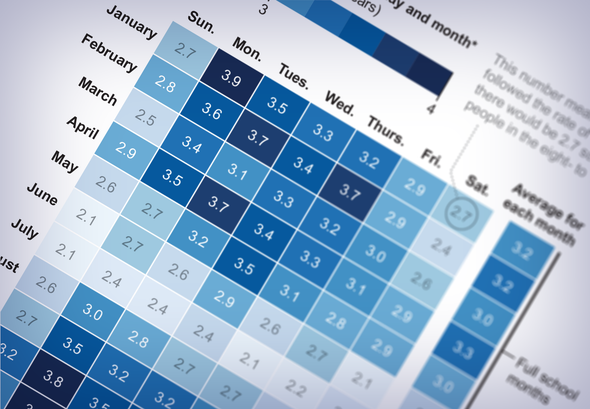
By using the #CentersforDiseaseControlandPrevention’s Wonder database to find information on #pediatric (17 years of age or younger) deaths by #suicide, I have created a “heat map” of #youth #suicide, and a #school-day association is plain to see. On weekdays and during #school months, there is a significant elevation of #suicide deaths in #children.


Looking at the monthly data, we can see that this elevation is not trivial: during #school months, the increase in #pediatric #suicides ranges between 30 and 43 percent. This is in sharp contrast with #adults, where we see #suiciderates typically peak in summer months. 


This situation has not improved over time: Compared with summer weekends, #school-month weekdays from 2016 to 2019 show a #pediatric #suiciderate increase of 62 percent. The increase was 42% from 1999 to 2015.


If we look at far more common events, such as emergency room visits for #mentalhealthconditions, we see a strikingly similar pattern. These data come from participating hospitals in a collection done by the #CDC.


#School comes with many things, good and bad. #School can be wonderful, with learning experiences, social successes and a sense of connection to others. But it can also be incredibly stressful because of academic burden, #bullying, health- and disability-related barriers, discrimination, lack of sleep and sometimes abuse. I often liken going to #school to a child’s full-time job. The #child has co-workers (classmates arranged by hierarchy), supervisors (#teachers), bosses (administrators and principals) and overtime (homework). And they have very early work hours (most #schools have hours that are very incompatible with children’s sleep patterns). Of course, work can be rewarding, but it’s also stressful.


Any time I present these data to #teachers, #parents, principals or #school administrators, they are shocked. This should be common knowledge. #Pediatric #suicides and #mentalhealthcrisis rates increase sharply when #school is in and ease when #school is out. This pattern is also found in other jurisdictions, such as Japan, Germany and Finland.


#James Donaldson notes:
Welcome to the “next chapter” of my life… being a voice and an advocate for #mentalhealthawarenessandsuicideprevention, especially pertaining to our younger generation of students and student-athletes.
Getting men to speak up and reach out for help and assistance is one of my passions. Us men need to not suffer in silence or drown our sorrows in alcohol, hang out at bars and strip joints, or get involved with drug use.
Having gone through a recent bout of #depression and #suicidalthoughts myself, I realize now, that I can make a huge difference in the lives of so many by sharing my story, and by sharing various resources I come across as I work in this space.
  #http://bit.ly/JamesMentalHealthArticle
Find out more about the work I do on my 501c3 non-profit foundation
website www.yourgiftoflife.org                            Order your copy of James Donaldson's latest book,
#CelebratingYourGiftofLife:
From The Verge of Suicide to a Life of Purpose and Joy


Book

www.celebratingyourgiftoflife.com

There are a number of ways to potentially mitigate this distress that I wish those responsible for our children’s education would explore. Some suggestions I’d put forth:


- Reduce homework (preferably get rid of it). Some of the best educational science available shows that excessive homework is of limited benefit and in fact harms children’s health and well-being.

- Add a #mentalhealth curriculum. We have developed incredible educational goals for math, reading, science and the arts. There should be a dedicated pathway for a much more universal and necessary learning: how to take care of yourself; how to look out for and help others; and how to improve both the detection and prevention of #mentalhealthcrises.

- Take #bullying seriously and don’t just focus on the #bullies. The #bullied and #bullies often come from similar backgrounds (histories of abuse, #trauma, chaos, deprivation, parental detachment, though this certainly isn’t universally the case). But whereas the #bullied tend to be internalizors, the #bullies are more often externalizers. #Bullies who were once victims of #bullying have the highest risk of having psychiatric problems in the future.

- Restore funding for playtime, music and art in #school and de-emphasize academic overload. #Children need relaxation, comfort, beauty, fun and play. #Children who have opportunities to play and rest will learn more in their academics, and they will be able to sustain their development as they grow.

- End “perfect attendance” awards and goals. While problematic truancy should be addressed, there is no less realistic notion for the rest of one’s life than the idea of “perfect attendance.” We should all, from time to time, recognize when we are at our limit and need a break. #Children should be encouraged to report when they can do so and be supported.

- Start #school later. How many more decades of research do we need to show that #children need more sleep and that #adolescents do better in #school when the day starts later? It’s time to make serious structural changes to the early-morning wake-up times.

- Be nonjudgmental and respect children’s identity and identity formation. This is not a “woke” concept. This is a caring, compassionate concept that works for all #children all the time.

- Recognize and address #childabuse within #schools. There exist (and many readers may likely recall) #teachers who are abusive, punitive and cruel. In one 2015 study, 44 percent of undergraduates recalled a time in K–12 #school that they labeled as emotional abuse by a #teacher. And in another study published in 2019, 3.4 percent of seventh- and eighth-grade #students reported #teachers #bullied them.

Every year my colleagues in the emergency department brace for the coming mid-September wave, as every year our #mentalhealthcrisis presentation volumes double and our days become much busier. Likely not coincidentally, in my jurisdiction, #school starts in the second week of September.


In the new #school year, if you are someone who works with #school-age #children, ask yourself what you could be doing to reduce pressure or improve quality of life for the #children in your care. This would truly be #suicideprevention.


IF YOU NEED HELP
If you or someone you know is struggling or having thoughts of #suicide, help is available. Call or text the #988Suicide&CrisisLifeline at #988 or use the online Lifeline Chat. #LGBTQ+ #Americans can reach out to the #TrevorProject by texting START to 678-678 or calling 1-866-488-7386.


https://standingabovethecrowd.com/2023/07/jamesdonaldson-on-mentalhealth-childrens-risk-of-suicide-increases-on-school-days/

Saturday, July 1, 2023

#JamesDonaldson On #MentalHeath – What Are The Symptoms Of #Depression In #Teenagers?
Signs your #child might be more than moody

Writer: Ron J. Steingard, MD

Clinical Expert: Ron J. Steingard, MD

What You'll Learn

- What are the symptoms of #depression in #teens?

- Why is it important to catch #depression early?

- What is the treatment for #depression in #teens?

- Quick Read

- Full Article

- Why early intervention is critical

- #Depression plus #anxiety

- Treatments for #depression

#Teens are often moody. That’s why it’s easy to miss signs that they’re actually depressed and need help. Symptoms of #depression in #teens include things like avoiding hanging out with friends and family and being sad or angry. Not doing well in #school, sleeping a lot and eating more or less than usual can also be signs.

If you notice that your #teen has been down a lot and lost interest in things they used to like doing, they may be depressed. The #teen may not even be aware they are depressed.

There are two main kinds of #depression. Major depressive disorder is the most common. That’s when a #kid has bad stretches of #depression for months. #Dysthymia, the other kind, is milder, but it can go on for years. Since #depression causes low energy and problems concentrating, it can have a negative impact on #school and friendships. That, in turn, can cause low #self-esteem, which can make #depression worse. Feeling bad about yourself can also lead to #anxiety.

Early treatment is important to head off long-term effects of #depression. The most common treatment is #cognitivebehavioraltherapy (#CBT), which is aimed at changing the negative thinking the teen is caught in. It teaches #kids ways of noticing and changing upsetting emotions. Antidepressant medication can be added to therapy.  The combination often works better than either treatment separately.

Since #adolescents are often moody, it can be difficult to recognize when your #child has become depressed and might need help. The thing people tend to notice first is withdrawal, or when the #teenager stops doing things they usually like to do. There might be other changes in her mood, including sadness or irritability. Or in their #behavior, including appetite, energy level, sleep patterns, and academic performance. If several of these symptoms are present, be vigilant about the possibility of #teen #depression.

This is especially important because by the time family members and other people around a #teenager note her lack of interest in most things—or what we call #anhedonia— they’ve usually been depressed for some time. #Depression is an internalizing disorder, i.e. one that disturbs a patient’s emotional life, rather than an externalizing one, which takes the form of disruptive or problematic #behavior. As such, it takes a while not only for others to recognize it but often for the #patient themselves to realize that their thinking, and emotional responses, are disturbed.

Note that there are actually two kinds of #depression. In major depressive disorder—the most familiar form of #depression—the symptoms occur in what may be severe episodes that tend to last from seven to nine months. But there is also another form of #depression called #dysthymia, in which the symptoms are milder, but they last longer, even years. So while the experience of #dysthymia may be less debilitating for the #child at any given moment, the risk is that there is more accrued damage and more time in which the #child is kept out of the healthy development process.

Why early intervention is critical

When a #teenager is depressed, their suffering isn’t the only reason it’s important to get help. In addition to the disorder itself, there are add-on effects that may cause lifelong issues. With #depression symptoms comes low energy and poor concentration, two factors that are likely to have a significant impact on social and academic functioning.

It’s easy to see the effects of poor academic functioning: falling behind in #school undermines a child’s confidence and self-image and can impact their future if it’s prolonged. But social learning is just as critical as academic learning in #adolescence. Deficits in social skills not only put depressed #teens behind their peers but in themselves can compound their #depression.

#James Donaldson notes:Welcome to the “next chapter” of my life… being a voice and an advocate for #mentalhealthawarenessandsuicideprevention, especially pertaining to our younger generation of students and student-athletes.Getting men to speak up and reach out for help and assistance is one of my passions. Us men need to not suffer in silence or drown our sorrows in alcohol, hang out at bars and strip joints, or get involved with drug use.Having gone through a recent bout of #depression and #suicidalthoughts myself, I realize now, that I can make a huge difference in the lives of so many by sharing my story, and by sharing various resources I come across as I work in this space.  #http://bit.ly/JamesMentalHealthArticleFind out more about the work I do on my 501c3 non-profit foundationwebsite www.yourgiftoflife.org                            Order your copy of James Donaldson's latest book,#CelebratingYourGiftofLife:From The Verge of Suicide to a Life of Purpose and Joy

www.celebratingyourgiftoflife.com

#Depression plus #anxiety

It’s important to understand that a #teenager who is depressed may also develop #anxiety and may need to be treated for two separate disorders. It may be that #depression leads to anxiety—the negative state of mind of a depressed #teenager lends itself to uncertainty. If you’re not feeling good about yourself, confident, secure, or safe, #anxiety may find fertile ground. It may also be because the regions of the brain affected by #anxiety and #depression are close together and mutually affected.

Two serious problems that are directly associated with #teenage #depression and #anxiety are suicidal thinking (or #behavior) and #substanceabuse. #Suicide is the third leading cause of death among #adolescents and young #adults aged 15 to 24, and we know that most #kids who commit #suicide have been suffering from a psychiatric illness. Especially at risk are #teenagers who hide their #depression and #anxiety from #parents and friends. That’s why it’s important to be alert to signs of these disorders—withdrawal, changes in #school performance, eating habits, sleeping patterns, things they enjoy doing—even when #teenagers aren’t forthcoming about how they feel.

Similarly, the majority of #teenagers who develop #substanceabuseproblems also have a #psychiatricdisorder, including, most commonly, #anxiety or #depression, which is another important reason to get treatment in a timely way.

Treatments for #depression

Fortunately, early involvement of #healthcareprofessionals can shorten the period of illness and decrease the likelihood of missing important life lessons.

The most common treatment a #mentalhealthprofessional is apt to use is some form of #cognitivebehavioraltherapy, and depending on how young the #child is, it may involve teaching the #parents as well. #Cognitivebehavioraltherapy is based on the idea that a person suffering from a #mooddisorder is trapped in a negative pattern of thought. Depressed #kids tend to evaluate themselves negatively, interpret the actions of others in a negative way, and assume the darkest possible outcome of events. In #CBT, we teach sufferers to challenge those negative thoughts, recognize the pattern and train themselves to think outside it. And in many cases, we see real improvement.

If the #depression is moderate to severe, treatment may involve medications such as antidepressants. A combination of psychotherapy and medication usually works better than either alone.
https://standingabovethecrowd.com/2023/07/jamesdonaldson-on-mentalheath-what-are-the-symptoms-of-depression-in-teenagers/

#JamesDonaldson On #MentalHeath – What Are The Symptoms Of #Depression In #Teenagers?

#JamesDonaldson On #MentalHeath – What Are The Symptoms Of #Depression In #Teenagers?

Signs your #child might be more than moody


Writer: Ron J. Steingard, MD


Clinical Expert: Ron J. Steingard, MD


What You'll Learn


- What are the symptoms of #depression in #teens?

- Why is it important to catch #depression early?

- What is the treatment for #depression in #teens?

- Quick Read

- Full Article

- Why early intervention is critical

- #Depression plus #anxiety

- Treatments for #depression

#Teens are often moody. That’s why it’s easy to miss signs that they’re actually depressed and need help. Symptoms of #depression in #teens include things like avoiding hanging out with friends and family and being sad or angry. Not doing well in #school, sleeping a lot and eating more or less than usual can also be signs.


If you notice that your #teen has been down a lot and lost interest in things they used to like doing, they may be depressed. The #teen may not even be aware they are depressed.


There are two main kinds of #depression. Major depressive disorder is the most common. That’s when a #kid has bad stretches of #depression for months. #Dysthymia, the other kind, is milder, but it can go on for years. Since #depression causes low energy and problems concentrating, it can have a negative impact on #school and friendships. That, in turn, can cause low #self-esteem, which can make #depression worse. Feeling bad about yourself can also lead to #anxiety.


Early treatment is important to head off long-term effects of #depression. The most common treatment is #cognitivebehavioraltherapy (#CBT), which is aimed at changing the negative thinking the teen is caught in. It teaches #kids ways of noticing and changing upsetting emotions. Antidepressant medication can be added to therapy.  The combination often works better than either treatment separately.


Since #adolescents are often moody, it can be difficult to recognize when your #child has become depressed and might need help. The thing people tend to notice first is withdrawal, or when the #teenager stops doing things they usually like to do. There might be other changes in her mood, including sadness or irritability. Or in their #behavior, including appetite, energy level, sleep patterns, and academic performance. If several of these symptoms are present, be vigilant about the possibility of #teen #depression.


This is especially important because by the time family members and other people around a #teenager note her lack of interest in most things—or what we call #anhedonia— they’ve usually been depressed for some time. #Depression is an internalizing disorder, i.e. one that disturbs a patient’s emotional life, rather than an externalizing one, which takes the form of disruptive or problematic #behavior. As such, it takes a while not only for others to recognize it but often for the #patient themselves to realize that their thinking, and emotional responses, are disturbed.


Note that there are actually two kinds of #depression. In major depressive disorder—the most familiar form of #depression—the symptoms occur in what may be severe episodes that tend to last from seven to nine months. But there is also another form of #depression called #dysthymia, in which the symptoms are milder, but they last longer, even years. So while the experience of #dysthymia may be less debilitating for the #child at any given moment, the risk is that there is more accrued damage and more time in which the #child is kept out of the healthy development process.


Why early intervention is critical


When a #teenager is depressed, their suffering isn’t the only reason it’s important to get help. In addition to the disorder itself, there are add-on effects that may cause lifelong issues. With #depression symptoms comes low energy and poor concentration, two factors that are likely to have a significant impact on social and academic functioning.


It’s easy to see the effects of poor academic functioning: falling behind in #school undermines a child’s confidence and self-image and can impact their future if it’s prolonged. But social learning is just as critical as academic learning in #adolescence. Deficits in social skills not only put depressed #teens behind their peers but in themselves can compound their #depression.


#James Donaldson notes:
Welcome to the “next chapter” of my life… being a voice and an advocate for #mentalhealthawarenessandsuicideprevention, especially pertaining to our younger generation of students and student-athletes.
Getting men to speak up and reach out for help and assistance is one of my passions. Us men need to not suffer in silence or drown our sorrows in alcohol, hang out at bars and strip joints, or get involved with drug use.
Having gone through a recent bout of #depression and #suicidalthoughts myself, I realize now, that I can make a huge difference in the lives of so many by sharing my story, and by sharing various resources I come across as I work in this space.
  #http://bit.ly/JamesMentalHealthArticle
Find out more about the work I do on my 501c3 non-profit foundation
website www.yourgiftoflife.org                            Order your copy of James Donaldson's latest book,
#CelebratingYourGiftofLife:
From The Verge of Suicide to a Life of Purpose and Joy


Book

www.celebratingyourgiftoflife.com

#Depression plus #anxiety


It’s important to understand that a #teenager who is depressed may also develop #anxiety and may need to be treated for two separate disorders. It may be that #depression leads to anxiety—the negative state of mind of a depressed #teenager lends itself to uncertainty. If you’re not feeling good about yourself, confident, secure, or safe, #anxiety may find fertile ground. It may also be because the regions of the brain affected by #anxiety and #depression are close together and mutually affected.


Two serious problems that are directly associated with #teenage #depression and #anxiety are suicidal thinking (or #behavior) and #substanceabuse. #Suicide is the third leading cause of death among #adolescents and young #adults aged 15 to 24, and we know that most #kids who commit #suicide have been suffering from a psychiatric illness. Especially at risk are #teenagers who hide their #depression and #anxiety from #parents and friends. That’s why it’s important to be alert to signs of these disorders—withdrawal, changes in #school performance, eating habits, sleeping patterns, things they enjoy doing—even when #teenagers aren’t forthcoming about how they feel.


Similarly, the majority of #teenagers who develop #substanceabuseproblems also have a #psychiatricdisorder, including, most commonly, #anxiety or #depression, which is another important reason to get treatment in a timely way.


Treatments for #depression


Fortunately, early involvement of #healthcareprofessionals can shorten the period of illness and decrease the likelihood of missing important life lessons.


The most common treatment a #mentalhealthprofessional is apt to use is some form of #cognitivebehavioraltherapy, and depending on how young the #child is, it may involve teaching the #parents as well. #Cognitivebehavioraltherapy is based on the idea that a person suffering from a #mooddisorder is trapped in a negative pattern of thought. Depressed #kids tend to evaluate themselves negatively, interpret the actions of others in a negative way, and assume the darkest possible outcome of events. In #CBT, we teach sufferers to challenge those negative thoughts, recognize the pattern and train themselves to think outside it. And in many cases, we see real improvement.


If the #depression is moderate to severe, treatment may involve medications such as antidepressants. A combination of psychotherapy and medication usually works better than either alone.


https://standingabovethecrowd.com/2023/07/jamesdonaldson-on-mentalheath-what-are-the-symptoms-of-depression-in-teenagers/