Thursday, January 4, 2024

James Donaldson on Mental Health - Live the Life You Truly Want To
Many people assume that if they start living they life they want to that they will be outcast from their friends and family. This is actually false, you can still live the life you feel that you should be living without this happening to you. Let’s look at how you can manage this.

No one expects you to always have the exact same viewpoint as them. When you do find yourself in disagreement just be careful about how you show this. While expressing your views, don’t become headstrong and forceful. Instead learn to listen to both sides of the argument or discussion. There doesn’t always have to be a clear winner.

While you may want to dress in a carefree manner, again do this with discretion. If you are visiting your parents or grandparents give them a little respect. In this instance dressing down may be more appropriate. You can still dress however you wish once your visit is over.

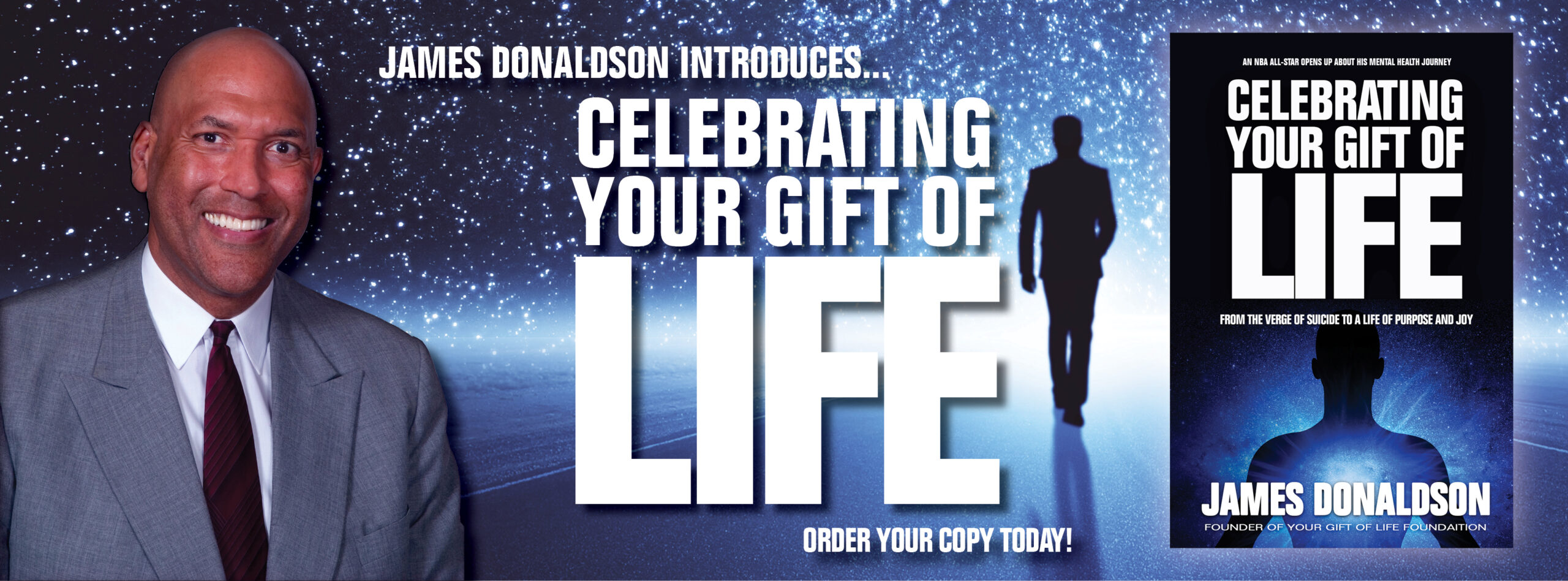
#James Donaldson notes:Welcome to the “next chapter” of my life… being a voice and an advocate for #mentalhealthawarenessandsuicideprevention, especially pertaining to our younger generation of students and student-athletes.Getting men to speak up and reach out for help and assistance is one of my passions. Us men need to not suffer in silence or drown our sorrows in alcohol, hang out at bars and strip joints, or get involved with drug use.Having gone through a recent bout of #depression and #suicidalthoughts myself, I realize now, that I can make a huge difference in the lives of so many by sharing my story, and by sharing various resources I come across as I work in this space.  #http://bit.ly/JamesMentalHealthArticleFind out more about the work I do on my 501c3 non-profit foundationwebsite www.yourgiftoflife.org Order your copy of James Donaldson's latest book,#CelebratingYourGiftofLife: From The Verge of Suicide to a Life of Purpose and Joy

Link for 40 Habits Signupbit.ly/40HabitsofMentalHealth

If you'd like to follow and receive my daily blog in to your inbox, just click on it with Follow It. Here's the link https://follow.it/james-donaldson-s-standing-above-the-crowd-s-blog-a-view-from-above-on-things-that-make-the-world-go-round?action=followPub

www.celebratingyourgiftoflife.com

Living your own life and being your own person is wonderful. Who doesn’t want to feel carefree and have no boundaries placed upon them? This doesn’t mean that everyone around you will want to do the same. Allow your friends to conform to the majority if that is what they wish. Don’t force actions on them that would make them feel uncomfortable.

When your friends and family see you as authentic this means that you really are being true to yourself. You are not afraid to share your views, raise objections and stand out amongst the crowd.

An authentic person is someone that means what they say, says what they mean and walks the talk! You know the type of person who you are, and you are extremely comfortable living in your own skin.

When you are living the life you want to live you share honestly with others. You are not vulnerable and yet, you know who you can be vulnerable with. You have an inner strength that is often admired by others. You genuinely know how to love, trust and respect the people in your life. Plus you can leave that ego of yours in the background if and when necessary. At the same time you seize every opportunity to learn, grow and explore everything around you.
https://standingabovethecrowd.com/james-donaldson-on-mental-health-live-the-life-you-truly-want-to/

James Donaldson on Mental Health - Learning Disabilities and Depression

James Donaldson on Mental Health - Learning Disabilities and Depression

Why kids with LDs often develop depression, and need emotional support, too



Divorce and Children

Writer: Molly Hagan


Clinical Experts: Laura Phillips, PsyD, ABPdN , Helene Omansky, LCSW


What You'll Learn


- Why are kids with LDs more likely to be depressed?

- How does school affect a child's self-esteem?

- How can parents and teachers emotionally support kids with learning disabilities?

- Quick Read

- Full Article

- School and self-worth

- Academic challenges get tougher

- Comparisons with peers

- Hiding the signs

- A vicious cycle — how depression impacts learning

- Classroom safety

- Combining academic and emotional supports


Research shows that children with learning disabilities run a higher risk of developing depression than other kids — and that this risk increases as they get older.


Depression comes from feelings of hopelessness and low self-worth. And the struggles kids have at school play a big role in how good or bad they feel about themselves. These challenges include more difficult work in the classroom as kids get older but also social problems.


When kids turn 8 or 9, they begin to compare themselves to their friends and peers. Kids with LDs might feel embarrassed by their learning challenges and want to hide them. Some kids will act out. Others, including many girls, will withdraw at school, and from friends  — which makes it much harder for parents and teachers to know that they have a learning disorder in the first place.


Dealing with undiagnosed learning disabilities can make kids anxious and depressed. And depression and anxiety, in turn, can affect the brain, making it harder to remember things and concentrate. Because being anxious or depressed makes it hard to learn, schools are beginning to teach social and emotional learning (SEL) skills to kids with LDs, to help them cope with difficult feelings. Learning support by itself is not enough to help kids succeed.


But while SEL skills are very helpful, kids showing signs of depression — like being tired all the time, seeming sad, or losing interest in things they usually enjoy — should see a medical professional for treatment.


We think of learning disabilities as affecting kids in school, but challenges in skills like reading, writing, math, and language affect all aspects of life, not just academic performance. We are using them all the time — reading street signs, counting change, playing games, and following conversations with friends.


Struggling with skills that appear to come easily to others, inside the classroom or out, can take an emotional toll starting at an early age. Research shows that children with learning disorders are at higher risk for developing depression. This risk increases as children enter their teenage years.


“Kids spend the majority of their waking hours in school,” says Laura Phillips, PhD, a neuropsychologist and the senior director of the Learning and Development Center at the Child Mind Institute. “When you spend eight hours a day engaged in something that’s challenging for you it has a very significant impact on your self-concept — meaning your idea about who you are as a person — and your ability to feel successful.”


School and self-worth


Depression can manifest in different ways:


- Appearing sad or irritable

- Trouble sleeping

- Losing interest in things you once enjoyed 

- Being tired all the time

- Gaining or losing a lot of weight

But at its root are feelings of hopelessness and low self-worth. Studies show that for kids with learning disorders, the school environment can contribute to and breed these feelings.


A child with an undiagnosed learning disability is particularly at risk for depression because they don’t understand why they struggle with things that others don’t. Frustration and failure create a sense that something must be wrong with them. A diagnosis can be reassuring and offer them the support they need — but success will still be a struggle. When it comes to a child’s emotions, an LD diagnosis is not a magic bullet.


??“It doesn’t always feel better right away,” notes Helene Omansky, LCSW, a senior social worker at the Child Mind Institute. “It will get better, but newly diagnosed kids need time to adjust to their support system, and to develop confidence in skills that they may have lacked.”


If you think your child might be depressed, consult a medical professional for help — but know there are ways parents and teachers can offer support, too.


Academic challenges get tougher


The requirements of school change as you get older, and there’s one shift that can be particularly tough for kids, especially those with reading and language deficits. “From kindergarten through second grade, you’re learning how to read,” Dr. Phillips explains. “By third grade, the emphasis shifts to reading to learn.”


In other words, reading becomes incorporated into every class. Kids who struggled in language arts classes but prided themselves on their math skills are suddenly confronted with math word problems. “And then they lose that confidence in the thing that might’ve been maintaining their sense of self and self-esteem,” Dr. Phillips explains.


This change is the first of many. Kids will continue to wrestle with their challenges in unexpected ways, and this can be discouraging.


“The impact of a learning disorder becomes more widespread as you move through school,” Dr. Phillips says.


It’s important for parents to understand the depth of frustration a child may be feeling and acknowledge it, says Omansky. We’re naturally inclined to dispel negativity with encouragement — “You’re so smart!” — but this can make a child feel isolated and unheard. If a child is saying they feel dumb because they can’t figure out how to solve a word problem, Omansky says, “It’s okay to validate that by saying something like, ‘I can see how frustrating this is for you.’”


Comparisons with peers


Around 8 or 9 years old, kids become less self-focused and begin to understand themselves in the context of — and in comparison, to — their peers. Where before school was merely frustrating, now kids may wonder why certain things appear to come easily to others. They may feel like they’re working twice as hard as those around them, and understandably, they may think this is unfair.


Kids also become more self-conscious at this age and might feel like their deficits are on display. This can look like a kid who doesn’t want to raise their hand in class, but it can also look like a kid who plays by themselves at recess. When a child can’t solve a math problem or gets called out for not finishing an assignment, it’s easy for them to go from “I feel dumb” to “Nobody is going to like me,” Omansky notes.


Kids with learning challenges can also struggle with social skills, such as following the thread of a conversation or finding the right words to respond. They sometimes fumble social cues, and given enough negative feedback, might avoid socializing altogether.


Some kids draw attention away from their challenges by acting out. Being perceived as funny or rebellious might even bolster your self-esteem. But avoiding your challenges doesn’t make you feel any better about them, it just makes you more determined to hide them.


Hiding the signs


Rates of learning disorders are not significantly different among genders, but boys are more likely to be diagnosed because of their tendency to be disruptive in class — an obvious red flag. Girls, meanwhile, tend to withdraw, making identification harder.


“Girls are much more likely to quietly sit in the back of the class and try to sink into the ground,” Dr. Phillips says.


This translates to girls not receiving a learning disorder diagnosis or being diagnosed late. When LDs are overlooked, a child’s anxiety or depression can be the first recognized signs that they need help. “They might become highly anxious or more academically demoralized,” says Dr Phillips. “So, it might be the anxiety or depression that first brings them to clinical attention.”


It’s important for adults to empathize with this experience, too. “Well-intended parents and teachers don’t want to put a spotlight on a kid unnecessarily, but they may not be asking the right questions that would allow for further intervention or exploration,” says Omansky. When a child is anxious, unmotivated, or depressed, the adults in their lives should investigate if they might be struggling, she adds. “Kids don’t always have the skillset to know how to self-advocate and say, ‘I don’t understand.’”


A vicious cycle — how depression impacts learning


Depression can actually impact cognitive functions, making learning challenges more acute.


Research shows that depression can:


- Slow information processing

- Slow memory consolidation, or how your brain transforms the things you learn into long-term memories

- Make it harder to pay attention and concentrate

- Interfere with sleep, which can also be bad for your brain

It’s a vicious cycle — learning challenges contributing to depression, contributing to more challenges — but there are ways to interrupt it.


#James Donaldson notes:
Welcome to the “next chapter” of my life… being a voice and an advocate for #mentalhealthawarenessandsuicideprevention, especially pertaining to our younger generation of students and student-athletes.
Getting men to speak up and reach out for help and assistance is one of my passions. Us men need to not suffer in silence or drown our sorrows in alcohol, hang out at bars and strip joints, or get involved with drug use.
Having gone through a recent bout of #depression and #suicidalthoughts myself, I realize now, that I can make a huge difference in the lives of so many by sharing my story, and by sharing various resources I come across as I work in this space.
  #http://bit.ly/JamesMentalHealthArticle
Find out more about the work I do on my 501c3 non-profit foundation
website www.yourgiftoflife.org Order your copy of James Donaldson's latest book,
#CelebratingYourGiftofLife: From The Verge of Suicide to a Life of Purpose and Joy


Link for 40 Habits Signup
bit.ly/40HabitsofMentalHealth


If you'd like to follow and receive my daily blog in to your inbox, just click on it with Follow It. Here's the link https://follow.it/james-donaldson-s-standing-above-the-crowd-s-blog-a-view-from-above-on-things-that-make-the-world-go-round?action=followPub


Book

www.celebratingyourgiftoflife.com

Classroom safety


How a child relates to their school environment can also affect how they learn and how they see themselves. This is a particularly important factor for Black children and other children of color, especially if they attend predominantly white schools. “If there’s a difference in skin color between kids and their teachers, they might enter the classroom with a different level of anxious arousal that they have to overcome in order to be fully engaged,” Dr. Phillips says.


If the school environment already makes you anxious, you’re more likely to shut down if learning is also a challenge. You might even develop a fear of going to school at all. Teachers should be aware that kids don’t experience school in a vacuum. They should understand the racial, cultural, demographic factors that impact kids, so kids feel safe enough to learn and ask for help if they need it.


Combining academic and emotional supports


Schools are beginning to embrace emotional supports for children with learning disorders. When kids feel defeated by their challenges, and resist learning because it makes them feel bad about themselves, academic support alone is not enough.


Increasingly, schools are using  social and emotional learning (SEL) techniques to help kids develop an awareness of the emotions that drive their behaviors — whether they are acting out, trying to disappear, or simply avoiding the tasks that are most difficult for them.


Kids can be taught strategies to manage big emotions around learning. Take kids with math learning disorders, who become anxious when asked to solve math problems. They tend to engage in negative self-talk — “I’m so bad at math. I’m going to fail this math test. I’m so stupid, I’m not going to get into college.”


The negative self-talk interferes with problem solving. “It taxes your working memory to the point where you can’t effectively problem solve,” explains Dr. Phillips. “So, you do poorly and then you see yourself as a bad math student.”


But kids can interrupt the cycle with a simple trick: saying the steps of the math problem as they do them. “If you’re verbally working through the steps, you can’t engage in negative self-talk and so you can’t tax the working memory system,” she adds.  “It’s very effective.”


The ability to embrace this kind of creative problem-solving is the secret weapon of having a learning disorder — but when a child shows signs of depression, it’s important to seek professional treatment. Understanding that emotional challenges and learning challenges are intertwined can help parents get kids the support they need.


Divorce and Children
https://standingabovethecrowd.com/james-donaldson-on-mental-health-learning-disabilities-and-depression/

Wednesday, January 3, 2024

James Donaldson on Mental Health - Live the Life You Truly Want To

James Donaldson on Mental Health - Live the Life You Truly Want To


Many people assume that if they start living they life they want to that they will be outcast from their friends and family. This is actually false, you can still live the life you feel that you should be living without this happening to you. Let’s look at how you can manage this.


No one expects you to always have the exact same viewpoint as them. When you do find yourself in disagreement just be careful about how you show this. While expressing your views, don’t become headstrong and forceful. Instead learn to listen to both sides of the argument or discussion. There doesn’t always have to be a clear winner.


While you may want to dress in a carefree manner, again do this with discretion. If you are visiting your parents or grandparents give them a little respect. In this instance dressing down may be more appropriate. You can still dress however you wish once your visit is over.


#James Donaldson notes:
Welcome to the “next chapter” of my life… being a voice and an advocate for #mentalhealthawarenessandsuicideprevention, especially pertaining to our younger generation of students and student-athletes.
Getting men to speak up and reach out for help and assistance is one of my passions. Us men need to not suffer in silence or drown our sorrows in alcohol, hang out at bars and strip joints, or get involved with drug use.
Having gone through a recent bout of #depression and #suicidalthoughts myself, I realize now, that I can make a huge difference in the lives of so many by sharing my story, and by sharing various resources I come across as I work in this space.
  #http://bit.ly/JamesMentalHealthArticle
Find out more about the work I do on my 501c3 non-profit foundation
website www.yourgiftoflife.org Order your copy of James Donaldson's latest book,
#CelebratingYourGiftofLife: From The Verge of Suicide to a Life of Purpose and Joy


Link for 40 Habits Signup
bit.ly/40HabitsofMentalHealth


If you'd like to follow and receive my daily blog in to your inbox, just click on it with Follow It. Here's the link https://follow.it/james-donaldson-s-standing-above-the-crowd-s-blog-a-view-from-above-on-things-that-make-the-world-go-round?action=followPub


Book

www.celebratingyourgiftoflife.com

Living your own life and being your own person is wonderful. Who doesn’t want to feel carefree and have no boundaries placed upon them? This doesn’t mean that everyone around you will want to do the same. Allow your friends to conform to the majority if that is what they wish. Don’t force actions on them that would make them feel uncomfortable.


When your friends and family see you as authentic this means that you really are being true to yourself. You are not afraid to share your views, raise objections and stand out amongst the crowd.


An authentic person is someone that means what they say, says what they mean and walks the talk! You know the type of person who you are, and you are extremely comfortable living in your own skin.


When you are living the life you want to live you share honestly with others. You are not vulnerable and yet, you know who you can be vulnerable with. You have an inner strength that is often admired by others. You genuinely know how to love, trust and respect the people in your life. Plus you can leave that ego of yours in the background if and when necessary. At the same time you seize every opportunity to learn, grow and explore everything around you.


https://standingabovethecrowd.com/james-donaldson-on-mental-health-live-the-life-you-truly-want-to/
James Donaldson on Mental Health - Follow Your Heart
If you want to be your own person then you will need to learn how to follow your heart. We all have those tugs and feelings that pull at our hearts, telling us where we want to go. Having the strength to follow them is different case altogether. In order to follow your heart you have to learn how to let go of certain things, and start acting upon your instincts and your desires.

So how do you start following your heart? First you have to learn how to trust yourself, this means learning to accept you for who you are. Take a look at your life and see what circumstances have led you to where you are today. Is this the path that you want to be on? If not it is time to change course, and only you can give yourself permission to do this.

It will not always be easy to follow your heart. You may end up upsetting or disappointing your family. May be you really don’t want the career your parents had hoped for. Or you heart’s desires may lead you to moving away from your family and friends. These decisions may not always be easy and it will take a good amount of soul searching in order to make them. This is when you know whether or not you are being true to yourself or not.

Life is not perfect for anyone, even if you are following your dreams. Life gets in the way and circumstances arise that are out of your control. You have to learn how to deal with them one by one. While still staying on course.

Following your heart doesn’t mean that you have to live the life of a missionary or live in a remote cabin. It means just allowing yourself to be that person that deep down inside you know you are. This means not being worried about what others think. It means airing your views openly without hiding. Plus it means being happy and content with the person that you have evolved into.

Being your own person is also never complete. It can be viewed as the journey of life. As you go through life your focus may shift and you change course. The life you led in your twenties and thirties may not be the one you want as you enter your fifties.

Are you currently following your heart? If not what’s holding you back?

#James Donaldson notes:Welcome to the “next chapter” of my life… being a voice and an advocate for #mentalhealthawarenessandsuicideprevention, especially pertaining to our younger generation of students and student-athletes.Getting men to speak up and reach out for help and assistance is one of my passions. Us men need to not suffer in silence or drown our sorrows in alcohol, hang out at bars and strip joints, or get involved with drug use.Having gone through a recent bout of #depression and #suicidalthoughts myself, I realize now, that I can make a huge difference in the lives of so many by sharing my story, and by sharing various resources I come across as I work in this space.  #http://bit.ly/JamesMentalHealthArticleFind out more about the work I do on my 501c3 non-profit foundationwebsite www.yourgiftoflife.org Order your copy of James Donaldson's latest book,#CelebratingYourGiftofLife: From The Verge of Suicide to a Life of Purpose and Joy

Link for 40 Habits Signupbit.ly/40HabitsofMentalHealth

If you'd like to follow and receive my daily blog in to your inbox, just click on it with Follow It. Here's the link https://follow.it/james-donaldson-s-standing-above-the-crowd-s-blog-a-view-from-above-on-things-that-make-the-world-go-round?action=followPub

www.celebratingyourgiftoflife.com
https://standingabovethecrowd.com/james-donaldson-on-mental-health-follow-your-heart/

Tuesday, January 2, 2024

James Donaldson on Mental Health - Follow Your Heart

James Donaldson on Mental Health - Follow Your Heart


If you want to be your own person then you will need to learn how to follow your heart. We all have those tugs and feelings that pull at our hearts, telling us where we want to go. Having the strength to follow them is different case altogether. In order to follow your heart you have to learn how to let go of certain things, and start acting upon your instincts and your desires.


So how do you start following your heart? First you have to learn how to trust yourself, this means learning to accept you for who you are. Take a look at your life and see what circumstances have led you to where you are today. Is this the path that you want to be on? If not it is time to change course, and only you can give yourself permission to do this.


It will not always be easy to follow your heart. You may end up upsetting or disappointing your family. May be you really don’t want the career your parents had hoped for. Or you heart’s desires may lead you to moving away from your family and friends. These decisions may not always be easy and it will take a good amount of soul searching in order to make them. This is when you know whether or not you are being true to yourself or not.


Life is not perfect for anyone, even if you are following your dreams. Life gets in the way and circumstances arise that are out of your control. You have to learn how to deal with them one by one. While still staying on course.


Following your heart doesn’t mean that you have to live the life of a missionary or live in a remote cabin. It means just allowing yourself to be that person that deep down inside you know you are. This means not being worried about what others think. It means airing your views openly without hiding. Plus it means being happy and content with the person that you have evolved into.


Being your own person is also never complete. It can be viewed as the journey of life. As you go through life your focus may shift and you change course. The life you led in your twenties and thirties may not be the one you want as you enter your fifties.


Are you currently following your heart? If not what’s holding you back?


#James Donaldson notes:
Welcome to the “next chapter” of my life… being a voice and an advocate for #mentalhealthawarenessandsuicideprevention, especially pertaining to our younger generation of students and student-athletes.
Getting men to speak up and reach out for help and assistance is one of my passions. Us men need to not suffer in silence or drown our sorrows in alcohol, hang out at bars and strip joints, or get involved with drug use.
Having gone through a recent bout of #depression and #suicidalthoughts myself, I realize now, that I can make a huge difference in the lives of so many by sharing my story, and by sharing various resources I come across as I work in this space.
  #http://bit.ly/JamesMentalHealthArticle
Find out more about the work I do on my 501c3 non-profit foundation
website www.yourgiftoflife.org Order your copy of James Donaldson's latest book,
#CelebratingYourGiftofLife: From The Verge of Suicide to a Life of Purpose and Joy


Link for 40 Habits Signup
bit.ly/40HabitsofMentalHealth


If you'd like to follow and receive my daily blog in to your inbox, just click on it with Follow It. Here's the link https://follow.it/james-donaldson-s-standing-above-the-crowd-s-blog-a-view-from-above-on-things-that-make-the-world-go-round?action=followPub


Book

www.celebratingyourgiftoflife.com


https://standingabovethecrowd.com/james-donaldson-on-mental-health-follow-your-heart/
James Donaldson on Mental Health - 10 ways to support your mental health in 2024
By 

CHRISTINA CARON

 and 

Dana G. Smith

Since the height of the pandemic, there has been a cultural shift in the way we talk about mental health. It’s as if the years of isolation and uncertainty helped us understand how vital our emotional needs were to our overall well-being.

Now that we’re paying more attention to our inner lives, it’s also essential that we take action. Fortunately, there are a number of things that everyone can do to nourish their mental health and find moments of joy.

Here are some of our favorite tips from the past year as we prepare to enter 2024.

1. Try a proven way to sleep better.

Experts say that getting enough sleep is one of the most important things we can do for our mental health. If you’re having trouble falling or staying asleep, studies have found that cognitive behavioral therapy for insomnia, or CBT-I, is as effective as using sleep medications in the short term — and more effective in the long term. CBT-I helps people address anxieties about sleep and find ways to relax. To find a provider, try the Society of Behavioral Sleep Medicine directory at behavioralsleep.org.

2. Learn how to tell whether your anxiety is protective or problematic.

It’s normal to feel anxious from time to time. In fact, having some anxiety can actually be useful. Experts say an internal alarm system can improve our performance, help us recognize danger and even encourage us to be more conscientious. So we asked Dr. Petros Levounis, president of the American Psychiatric Association: How much anxiety is too much?

“If you start to notice that worry and fear are there constantly, that is a signal that you need some help,” he said.

Other signs to look out for include restlessness, a sense of fear or doom, increased heart rate, sweating, trembling and trouble concentrating.

3. Stop the worry cycle.

If you have a tendency to ruminate, there are a few simple ways to curb the habit. The first is to distract yourself: Research shows that diversions can help get your mind off whatever is stressing you out. Try playing a word game or listening to music, paying close attention to the lyrics.

Other times, it’s better not to fight the urge — but that doesn’t mean you should let your thoughts spiral out of control. Set a timer for 10 to 30 minutes of dedicated rumination time, and give yourself permission to mentally mull things over. When the timer goes off, it’s time to move on.

4. Practice ‘five things tidying.’

When you’re struggling with your mental health, basic tasks such as washing dishes or doing laundry can feel impossible. But living amid mess can make you feel even worse. KC Davis, a licensed professional counselor and author of the book “How to Keep House While Drowning,” advises focusing on function over aesthetics — your home doesn’t have to be perfect, but it should be livable.

An efficient way to keep things from getting out of hand is to practice what she calls “five things tidying.” Tackle the five main categories of clutter — trash, dishes, laundry, things with a place and things without a place — one at a time to help cleaning feel more manageable.

5. Embrace gratitude.

Gratitude is a positive emotion that can arise when you acknowledge that you have goodness in your life and that other people — or higher powers, if you believe in them — have helped you achieve that goodness.

To really reap the benefits of gratitude, experts say, it’s important to express it whenever possible. That might include writing letters of thanks or listing the positive things in your life in a journal. Giving thanks to friends, romantic partners and even co-workers can also offer a relationship boost.

6. Be optimistic about aging.

Research shows that mindset really matters when it comes to health, and it can even extend your life. A classic study found that people who were optimistic about aging lived 7 1/2 years longer than those who had negative perceptions of it.

Sign up for Morning Brief

Delivered weekday mornings, this email provides a quick overview of top stories and need-to-know news, including the latest on the novel coronavirus.

To adopt a more positive outlook about getting older, shift your focus to the benefits of aging, including better emotional well-being and higher emotional intelligence. Look for aging role models, too: older people who stay physically active and engaged in their communities, or those with traits that you admire.

7. Participate in the arts.

The notion that art can improve mental well-being is something many people intuitively understand but don’t necessarily put into practice.

You don’t need talent to give it a try, experts say. Writing a poem, singing or drawing can all help elevate your mood, no matter how creative you consider yourself to be. One of the easiest ways to get started is to color something intricate: Spending 20 minutes coloring a mandala (a complex geometric design) is more helpful for reducing anxiety than free-form coloring for the same length of time, research has found.

8. Look for a little bit of awe every day.

Sometimes we have to remind ourselves to connect with the physical world around us. Enter the awe walk.

Pick a walking spot (either new or familiar) and imagine that you’re seeing it for the first time. Then pay attention to your senses. Feel the wind on your face, touch the petals of a flower. Simply notice the sky. It can be more restorative than you might expect.

9. Take a tech break.

If you’re having trouble focusing, it’s not just you. Research has found that over the past two decades, the amount of time we spend on a given task has shrunk to an average of just 47 seconds, down from 2 1/2 minutes. Technology is often to blame.

#James Donaldson notes:Welcome to the “next chapter” of my life… being a voice and an advocate for #mentalhealthawarenessandsuicideprevention, especially pertaining to our younger generation of students and student-athletes.Getting men to speak up and reach out for help and assistance is one of my passions. Us men need to not suffer in silence or drown our sorrows in alcohol, hang out at bars and strip joints, or get involved with drug use.Having gone through a recent bout of #depression and #suicidalthoughts myself, I realize now, that I can make a huge difference in the lives of so many by sharing my story, and by sharing various resources I come across as I work in this space.  #http://bit.ly/JamesMentalHealthArticleFind out more about the work I do on my 501c3 non-profit foundationwebsite www.yourgiftoflife.org Order your copy of James Donaldson's latest book,#CelebratingYourGiftofLife: From The Verge of Suicide to a Life of Purpose and Joy

Link for 40 Habits Signupbit.ly/40HabitsofMentalHealth

If you'd like to follow and receive my daily blog in to your inbox, just click on it with Follow It. Here's the link https://follow.it/james-donaldson-s-standing-above-the-crowd-s-blog-a-view-from-above-on-things-that-make-the-world-go-round?action=followPub

www.celebratingyourgiftoflife.com

To regain control of your concentration, Larry Rosen, a professor emeritus of psychology at California State University, Dominguez Hills, suggested a strategy he calls “tech breaks.” Set a timer for 15 minutes, then silence and set aside your phone. When time is up, take one or two minutes to check your favorite apps — that’s your tech break — and get back to work for another 15-minute cycle. The goal is to gradually increase the time between your tech breaks, building up to 45 minutes (or more) away from your phone.

10. Take a deep breath.

One of the fastest, easiest ways you can calm your mind and body is by taking slow, deep breaths. Doing so helps to turn up your parasympathetic nervous system — the counterbalance to the “fight or flight” stress response — and lower your blood pressure and regulate your heart rate.

One breathing exercise that can be particularly helpful for mitigating fear and anxiety is 4-4-8 breathing, where you inhale for four counts, hold your breath for four counts and exhale for eight counts.
https://standingabovethecrowd.com/james-donaldson-on-mental-health-10-ways-to-support-your-mental-health-in-2024/

Monday, January 1, 2024

James Donaldson on Mental Health - 10 ways to support your mental health in 2024

James Donaldson on Mental Health - 10 ways to support your mental health in 2024


By 


CHRISTINA CARON


 and 


Dana G. Smith


Since the height of the pandemic, there has been a cultural shift in the way we talk about mental health. It’s as if the years of isolation and uncertainty helped us understand how vital our emotional needs were to our overall well-being.


Now that we’re paying more attention to our inner lives, it’s also essential that we take action. Fortunately, there are a number of things that everyone can do to nourish their mental health and find moments of joy.


Here are some of our favorite tips from the past year as we prepare to enter 2024.


1. Try a proven way to sleep better.


Experts say that getting enough sleep is one of the most important things we can do for our mental health. If you’re having trouble falling or staying asleep, studies have found that cognitive behavioral therapy for insomnia, or CBT-I, is as effective as using sleep medications in the short term — and more effective in the long term. CBT-I helps people address anxieties about sleep and find ways to relax. To find a provider, try the Society of Behavioral Sleep Medicine directory at behavioralsleep.org.


2. Learn how to tell whether your anxiety is protective or problematic.


It’s normal to feel anxious from time to time. In fact, having some anxiety can actually be useful. Experts say an internal alarm system can improve our performance, help us recognize danger and even encourage us to be more conscientious. So we asked Dr. Petros Levounis, president of the American Psychiatric Association: How much anxiety is too much?


“If you start to notice that worry and fear are there constantly, that is a signal that you need some help,” he said.


Other signs to look out for include restlessness, a sense of fear or doom, increased heart rate, sweating, trembling and trouble concentrating.


3. Stop the worry cycle.


If you have a tendency to ruminate, there are a few simple ways to curb the habit. The first is to distract yourself: Research shows that diversions can help get your mind off whatever is stressing you out. Try playing a word game or listening to music, paying close attention to the lyrics.


Other times, it’s better not to fight the urge — but that doesn’t mean you should let your thoughts spiral out of control. Set a timer for 10 to 30 minutes of dedicated rumination time, and give yourself permission to mentally mull things over. When the timer goes off, it’s time to move on.


4. Practice ‘five things tidying.’


When you’re struggling with your mental health, basic tasks such as washing dishes or doing laundry can feel impossible. But living amid mess can make you feel even worse. KC Davis, a licensed professional counselor and author of the book “How to Keep House While Drowning,” advises focusing on function over aesthetics — your home doesn’t have to be perfect, but it should be livable.


An efficient way to keep things from getting out of hand is to practice what she calls “five things tidying.” Tackle the five main categories of clutter — trash, dishes, laundry, things with a place and things without a place — one at a time to help cleaning feel more manageable.


5. Embrace gratitude.


Gratitude is a positive emotion that can arise when you acknowledge that you have goodness in your life and that other people — or higher powers, if you believe in them — have helped you achieve that goodness.


To really reap the benefits of gratitude, experts say, it’s important to express it whenever possible. That might include writing letters of thanks or listing the positive things in your life in a journal. Giving thanks to friends, romantic partners and even co-workers can also offer a relationship boost.


6. Be optimistic about aging.


Research shows that mindset really matters when it comes to health, and it can even extend your life. A classic study found that people who were optimistic about aging lived 7 1/2 years longer than those who had negative perceptions of it.


Sign up for Morning Brief

Delivered weekday mornings, this email provides a quick overview of top stories and need-to-know news, including the latest on the novel coronavirus.


To adopt a more positive outlook about getting older, shift your focus to the benefits of aging, including better emotional well-being and higher emotional intelligence. Look for aging role models, too: older people who stay physically active and engaged in their communities, or those with traits that you admire.


7. Participate in the arts.


The notion that art can improve mental well-being is something many people intuitively understand but don’t necessarily put into practice.


You don’t need talent to give it a try, experts say. Writing a poem, singing or drawing can all help elevate your mood, no matter how creative you consider yourself to be. One of the easiest ways to get started is to color something intricate: Spending 20 minutes coloring a mandala (a complex geometric design) is more helpful for reducing anxiety than free-form coloring for the same length of time, research has found.


8. Look for a little bit of awe every day.


Sometimes we have to remind ourselves to connect with the physical world around us. Enter the awe walk.


Pick a walking spot (either new or familiar) and imagine that you’re seeing it for the first time. Then pay attention to your senses. Feel the wind on your face, touch the petals of a flower. Simply notice the sky. It can be more restorative than you might expect.


9. Take a tech break.


If you’re having trouble focusing, it’s not just you. Research has found that over the past two decades, the amount of time we spend on a given task has shrunk to an average of just 47 seconds, down from 2 1/2 minutes. Technology is often to blame.


#James Donaldson notes:
Welcome to the “next chapter” of my life… being a voice and an advocate for #mentalhealthawarenessandsuicideprevention, especially pertaining to our younger generation of students and student-athletes.
Getting men to speak up and reach out for help and assistance is one of my passions. Us men need to not suffer in silence or drown our sorrows in alcohol, hang out at bars and strip joints, or get involved with drug use.
Having gone through a recent bout of #depression and #suicidalthoughts myself, I realize now, that I can make a huge difference in the lives of so many by sharing my story, and by sharing various resources I come across as I work in this space.
  #http://bit.ly/JamesMentalHealthArticle
Find out more about the work I do on my 501c3 non-profit foundation
website www.yourgiftoflife.org Order your copy of James Donaldson's latest book,
#CelebratingYourGiftofLife: From The Verge of Suicide to a Life of Purpose and Joy


Link for 40 Habits Signup
bit.ly/40HabitsofMentalHealth


If you'd like to follow and receive my daily blog in to your inbox, just click on it with Follow It. Here's the link https://follow.it/james-donaldson-s-standing-above-the-crowd-s-blog-a-view-from-above-on-things-that-make-the-world-go-round?action=followPub


Book

www.celebratingyourgiftoflife.com

To regain control of your concentration, Larry Rosen, a professor emeritus of psychology at California State University, Dominguez Hills, suggested a strategy he calls “tech breaks.” Set a timer for 15 minutes, then silence and set aside your phone. When time is up, take one or two minutes to check your favorite apps — that’s your tech break — and get back to work for another 15-minute cycle. The goal is to gradually increase the time between your tech breaks, building up to 45 minutes (or more) away from your phone.


10. Take a deep breath.


One of the fastest, easiest ways you can calm your mind and body is by taking slow, deep breaths. Doing so helps to turn up your parasympathetic nervous system — the counterbalance to the “fight or flight” stress response — and lower your blood pressure and regulate your heart rate.


One breathing exercise that can be particularly helpful for mitigating fear and anxiety is 4-4-8 breathing, where you inhale for four counts, hold your breath for four counts and exhale for eight counts.


https://standingabovethecrowd.com/james-donaldson-on-mental-health-10-ways-to-support-your-mental-health-in-2024/