Sunday, February 4, 2024

James Donaldson on Mental Health - Record suicides ‘a wake-up call’ to challenge current approach to mental health care
Key takeaways:

- The rise in suicide rates underscores the failure of the current mental health care approach.

- Collaboration and empathy are two key solutions to address challenges within the system.

A recently released report from the CDC revealed a grim milestone in mental health — a record-breaking 50,000 suicides in 2022.

This is a 3% increase from the previous year, serving as haunting proof that our current approach to mental health care is failing those who need it most. While the numbers are alarming, it is more concerning to ignore them.

It’s imperative to dissect the existing mental health care continuum in the U.S., acknowledging the stark realities and gaps that contribute to this alarming rise in suicides. The statistics, such as those provided by the CDC, are not just numbers but represent lives lost and a system in dire need of reevaluation.

A critical examination of the mental health care system reveals significant gaps, hindering effective care. Addressing the mental health crisis requires a multifaceted approach, centered on accessibility, the patient and provider relationship, and personalized care.

Accessibility through technological advancements

Accessibility to mental health services remains a hurdle, with more than one-third of the U.S. population facing a shortage of mental health care providers, according to an editorial in Nature Mental Health. In addition, some areas in the system are ill-equipped to address the diverse and complex needs of our population, leaving many feeling overlooked and neglected. As we navigate these challenges, it becomes crucial to highlight potential solutions that can pave the way for a more effective and compassionate mental health care system.

Moreover, embracing innovative technologies can enhance accessibility to mental health services, reaching those who might otherwise be left without support. Telehealth platforms, mental health apps and other digital solutions can democratize mental health care, ensuring that geographical barriers and resource constraints do not impede someone’s journey to healing.

By leveraging technology and telehealth capabilities, patients can communicate directly with their care team between sessions, ensuring consistent, quality care and access to resources at their convenience. When the person on the other end of the communication is familiar with the patient and their history, the interaction is comprehensive and individualized to best support specific therapeutic approaches, interventions or coping strategies.

Empathy at every level of care

As a patient heals, they may need different types of care during the journey. This often means a new provider, which brings up uncertainty as they have to begin the entire process of getting to know and trust someone all over again, in addition to feeling that they will need to once again get someone up to speed on their background. Having the same provider be with the patient during every step of their journey allows for the same level of understanding throughout the care continuum. Patients no longer feel handed off, but instead constantly supported at every level of care.

A strong patient and provider relationship is critical to improving mental health, and many times a provider only has “one shot” during the initial visit to make a connection. This is why having a mental health provider who exhibits empathy from the start is nonnegotiable. Mental health facilities must assess personalities upfront to ensure the patient and provider will be a strong match, and that the provider can adapt approaches that can lead to more positive outcomes.

Today, there are assessments available that can help determine the strength of the therapeutic alliance. This creates a new standard of care for organizations, empowering them to predict who’s likely to be successful and stay for the long term, a benefit to both the patient and the system alike.

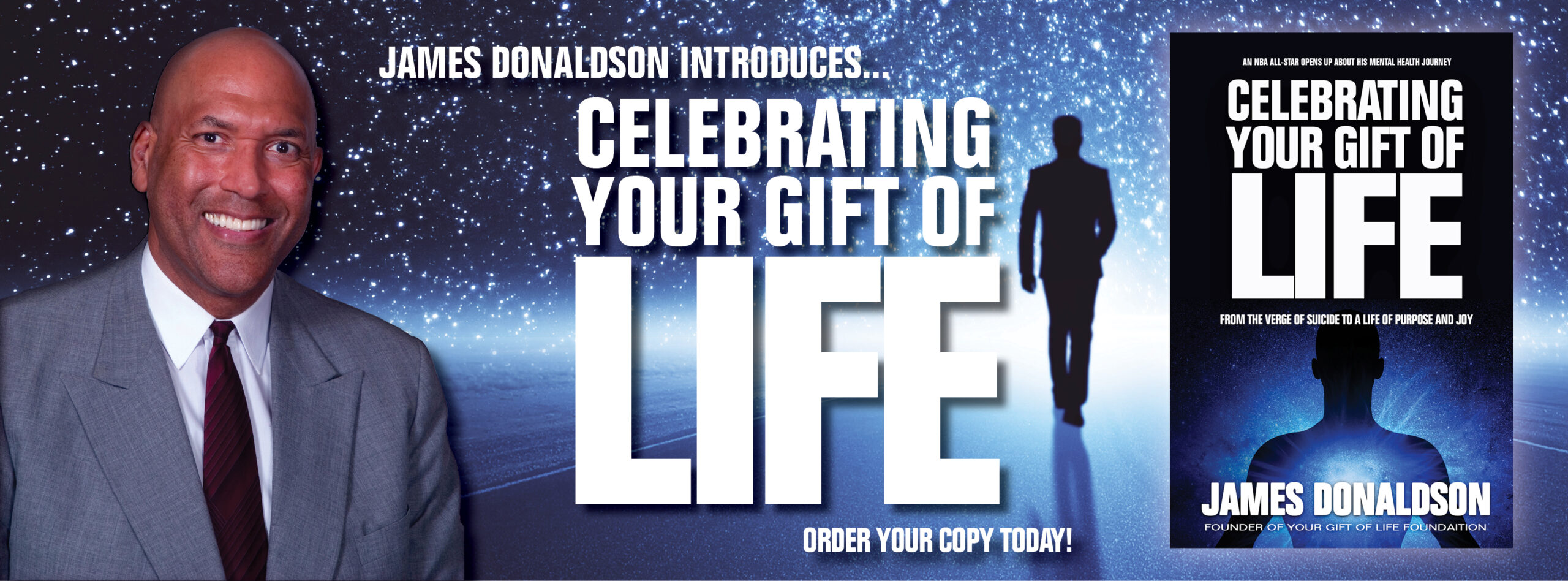
#James Donaldson notes:Welcome to the “next chapter” of my life… being a voice and an advocate for #mentalhealthawarenessandsuicideprevention, especially pertaining to our younger generation of students and student-athletes.Getting men to speak up and reach out for help and assistance is one of my passions. Us men need to not suffer in silence or drown our sorrows in alcohol, hang out at bars and strip joints, or get involved with drug use.Having gone through a recent bout of #depression and #suicidalthoughts myself, I realize now, that I can make a huge difference in the lives of so many by sharing my story, and by sharing various resources I come across as I work in this space.  #http://bit.ly/JamesMentalHealthArticleFind out more about the work I do on my 501c3 non-profit foundationwebsite www.yourgiftoflife.org Order your copy of James Donaldson's latest book,#CelebratingYourGiftofLife: From The Verge of Suicide to a Life of Purpose and Joy

www.celebratingyourgiftoflife.com

Link for 40 Habits Signupbit.ly/40HabitsofMentalHealth

If you'd like to follow and receive my daily blog in to your inbox, just click on it with Follow It. Here's the link https://follow.it/james-donaldson-s-standing-above-the-crowd-s-blog-a-view-from-above-on-things-that-make-the-world-go-round?action=followPub

Personalizing therapy

Mental health is deeply personal, and the approach to care should be, too, tailored to align with an individual’s specific experiences, circumstances and preferences. Personalized mental health care promotes a more empathetic and deep understanding that can not only increase positive experiences but also foster a stronger connection of trust between the patient and provider.

There is no “one right way” to achieve mental well-being. By combining evidence-based therapies and a compassionate personal touch, patients can have a stronger chance to recover, grow and experience an improved quality of life.

While these changes won’t happen overnight, it is incumbent upon us to begin shifting the narrative surrounding how mental health care is addressed. The record number of suicides in 2022 serves as a wake-up call, an urgent plea for change. The path forward will not be forged by a single organization but rather through a collaborative endeavor of voices, hands and hearts.
https://standingabovethecrowd.com/james-donaldson-on-mental-health-record-suicides-a-wake-up-call-to-challenge-current-approach-to-mental-health-care/

Saturday, February 3, 2024

James Donaldson on Mental Health - Record suicides ‘a wake-up call’ to challenge current approach to mental health care

James Donaldson on Mental Health - Record suicides ‘a wake-up call’ to challenge current approach to mental health care


Key takeaways:


- The rise in suicide rates underscores the failure of the current mental health care approach.

- Collaboration and empathy are two key solutions to address challenges within the system.

A recently released report from the CDC revealed a grim milestone in mental health — a record-breaking 50,000 suicides in 2022.


This is a 3% increase from the previous year, serving as haunting proof that our current approach to mental health care is failing those who need it most. While the numbers are alarming, it is more concerning to ignore them.


Neha Kumar, LMFT

It’s imperative to dissect the existing mental health care continuum in the U.S., acknowledging the stark realities and gaps that contribute to this alarming rise in suicides. The statistics, such as those provided by the CDC, are not just numbers but represent lives lost and a system in dire need of reevaluation.


A critical examination of the mental health care system reveals significant gaps, hindering effective care. Addressing the mental health crisis requires a multifaceted approach, centered on accessibility, the patient and provider relationship, and personalized care.


Accessibility through technological advancements


Accessibility to mental health services remains a hurdle, with more than one-third of the U.S. population facing a shortage of mental health care providers, according to an editorial in Nature Mental Health. In addition, some areas in the system are ill-equipped to address the diverse and complex needs of our population, leaving many feeling overlooked and neglected. As we navigate these challenges, it becomes crucial to highlight potential solutions that can pave the way for a more effective and compassionate mental health care system.


Moreover, embracing innovative technologies can enhance accessibility to mental health services, reaching those who might otherwise be left without support. Telehealth platforms, mental health apps and other digital solutions can democratize mental health care, ensuring that geographical barriers and resource constraints do not impede someone’s journey to healing.


By leveraging technology and telehealth capabilities, patients can communicate directly with their care team between sessions, ensuring consistent, quality care and access to resources at their convenience. When the person on the other end of the communication is familiar with the patient and their history, the interaction is comprehensive and individualized to best support specific therapeutic approaches, interventions or coping strategies.


Empathy at every level of care


As a patient heals, they may need different types of care during the journey. This often means a new provider, which brings up uncertainty as they have to begin the entire process of getting to know and trust someone all over again, in addition to feeling that they will need to once again get someone up to speed on their background. Having the same provider be with the patient during every step of their journey allows for the same level of understanding throughout the care continuum. Patients no longer feel handed off, but instead constantly supported at every level of care.


A strong patient and provider relationship is critical to improving mental health, and many times a provider only has “one shot” during the initial visit to make a connection. This is why having a mental health provider who exhibits empathy from the start is nonnegotiable. Mental health facilities must assess personalities upfront to ensure the patient and provider will be a strong match, and that the provider can adapt approaches that can lead to more positive outcomes.


Today, there are assessments available that can help determine the strength of the therapeutic alliance. This creates a new standard of care for organizations, empowering them to predict who’s likely to be successful and stay for the long term, a benefit to both the patient and the system alike.


#James Donaldson notes:
Welcome to the “next chapter” of my life… being a voice and an advocate for #mentalhealthawarenessandsuicideprevention, especially pertaining to our younger generation of students and student-athletes.
Getting men to speak up and reach out for help and assistance is one of my passions. Us men need to not suffer in silence or drown our sorrows in alcohol, hang out at bars and strip joints, or get involved with drug use.
Having gone through a recent bout of #depression and #suicidalthoughts myself, I realize now, that I can make a huge difference in the lives of so many by sharing my story, and by sharing various resources I come across as I work in this space.
  #http://bit.ly/JamesMentalHealthArticle
Find out more about the work I do on my 501c3 non-profit foundation
website www.yourgiftoflife.org Order your copy of James Donaldson's latest book,
#CelebratingYourGiftofLife: From The Verge of Suicide to a Life of Purpose and Joy


Book

www.celebratingyourgiftoflife.com


Link for 40 Habits Signup
bit.ly/40HabitsofMentalHealth


If you'd like to follow and receive my daily blog in to your inbox, just click on it with Follow It. Here's the link https://follow.it/james-donaldson-s-standing-above-the-crowd-s-blog-a-view-from-above-on-things-that-make-the-world-go-round?action=followPub


Personalizing therapy


Mental health is deeply personal, and the approach to care should be, too, tailored to align with an individual’s specific experiences, circumstances and preferences. Personalized mental health care promotes a more empathetic and deep understanding that can not only increase positive experiences but also foster a stronger connection of trust between the patient and provider.


There is no “one right way” to achieve mental well-being. By combining evidence-based therapies and a compassionate personal touch, patients can have a stronger chance to recover, grow and experience an improved quality of life.


While these changes won’t happen overnight, it is incumbent upon us to begin shifting the narrative surrounding how mental health care is addressed. The record number of suicides in 2022 serves as a wake-up call, an urgent plea for change. The path forward will not be forged by a single organization but rather through a collaborative endeavor of voices, hands and hearts.


https://standingabovethecrowd.com/james-donaldson-on-mental-health-record-suicides-a-wake-up-call-to-challenge-current-approach-to-mental-health-care/
James Donaldson on Mental Health - High school students who report using alcohol, cannabis or nicotine at higher risk for suicidal thoughts and other mental health disorders
Teens and drugs

by Massachusetts General Hospital

Newswise — BOSTON –High school students who reported using cannabis, alcohol, or nicotine were more likely to have thoughts about suicide, feel depressed or anxious, have unusual experiences, and exhibit inattention or hyperactivity, according to recent survey-based study conducted by researchers at Massachusetts General Hospital (MGH) and the University of Minnesota.The study, which is published in JAMA Pediatrics, included 2022–2023 survey results from more than 15,000 high school students across Massachusetts.“We sought to determine whether substance use was dose-dependently associated with various psychiatric symptoms in a large sample if high school students, and whether these associations differed depending on the type of substance used,” says senior author Randi M. Schuster, PhD, an associate professor of psychology in the Department of Psychiatry at MGH and the director of School-Based Research and Program Development within MGH’s Center for Addiction Medicine.Schuster and her colleagues found that alcohol use, cannabis use and nicotine use were each associated with an increased prevalence of suicidal thoughts as well as depression/anxiety symptoms, psychotic experiences, and attention deficit hyperactivity disorder symptoms.For example, thoughts of suicide were approximately five-times more prevalent among high school students who used substances daily or near daily compared with those who did not.Increases in psychiatric symptoms were detected even among adolescents with relatively low levels of use. The investigators’ findings were replicated when they examined responses from a national survey conducted in 2021.“Our study’s results highlight the prevalence of psychiatric co-morbidities among young people who use substances, and they lend strong support for the notion that screening, prevention, intervention and policy efforts need to comprehensively address targets beyond substance use alone,” says lead author Brenden Tervo-Clemmens, PhD, an assistant professor at the University of Minnesota Medical School. “Also, these efforts may not need to necessarily be specific to a given substance, but rather reflect the multifaceted mental health needs of all adolescents who use substances.”Schuster is currently heading up a study that will survey individual students over time to provide additional insights into the relationship and timing of substance use and psychiatric symptoms, which could help investigators develop interventions to better safeguard adolescents’ mental health.

#James Donaldson notes:Welcome to the “next chapter” of my life… being a voice and an advocate for #mentalhealthawarenessandsuicideprevention, especially pertaining to our younger generation of students and student-athletes.Getting men to speak up and reach out for help and assistance is one of my passions. Us men need to not suffer in silence or drown our sorrows in alcohol, hang out at bars and strip joints, or get involved with drug use.Having gone through a recent bout of #depression and #suicidalthoughts myself, I realize now, that I can make a huge difference in the lives of so many by sharing my story, and by sharing various resources I come across as I work in this space.  #http://bit.ly/JamesMentalHealthArticleFind out more about the work I do on my 501c3 non-profit foundationwebsite www.yourgiftoflife.org Order your copy of James Donaldson's latest book,#CelebratingYourGiftofLife: From The Verge of Suicide to a Life of Purpose and Joy

www.celebratingyourgiftoflife.com

Link for 40 Habits Signupbit.ly/40HabitsofMentalHealth

If you'd like to follow and receive my daily blog in to your inbox, just click on it with Follow It. Here's the link https://follow.it/james-donaldson-s-standing-above-the-crowd-s-blog-a-view-from-above-on-things-that-make-the-world-go-round?action=followPub

Teens and drugs
https://standingabovethecrowd.com/james-donaldson-on-mental-health-high-school-students-who-report-using-alcohol-cannabis-or-nicotine-at-higher-risk-for-suicidal-thoughts-and-other-mental-health-disorders/

Friday, February 2, 2024

James Donaldson on Mental Health - High school students who report using alcohol, cannabis or nicotine at higher risk for suicidal thoughts and other mental health disorders

James Donaldson on Mental Health - High school students who report using alcohol, cannabis or nicotine at higher risk for suicidal thoughts and other mental health disorders
photo of man smoking bluntTeens and drugs

by Massachusetts General Hospital


Newswise — BOSTON –High school students who reported using cannabis, alcohol, or nicotine were more likely to have thoughts about suicide, feel depressed or anxious, have unusual experiences, and exhibit inattention or hyperactivity, according to recent survey-based study conducted by researchers at Massachusetts General Hospital (MGH) and the University of Minnesota.

The study, which is published in JAMA Pediatrics, included 2022–2023 survey results from more than 15,000 high school students across Massachusetts.

“We sought to determine whether substance use was dose-dependently associated with various psychiatric symptoms in a large sample if high school students, and whether these associations differed depending on the type of substance used,” says senior author Randi M. Schuster, PhD, an associate professor of psychology in the Department of Psychiatry at MGH and the director of School-Based Research and Program Development within MGH’s Center for Addiction Medicine.

Schuster and her colleagues found that alcohol use, cannabis use and nicotine use were each associated with an increased prevalence of suicidal thoughts as well as depression/anxiety symptoms, psychotic experiences, and attention deficit hyperactivity disorder symptoms.

For example, thoughts of suicide were approximately five-times more prevalent among high school students who used substances daily or near daily compared with those who did not.

Increases in psychiatric symptoms were detected even among adolescents with relatively low levels of use. The investigators’ findings were replicated when they examined responses from a national survey conducted in 2021.

“Our study’s results highlight the prevalence of psychiatric co-morbidities among young people who use substances, and they lend strong support for the notion that screening, prevention, intervention and policy efforts need to comprehensively address targets beyond substance use alone,” says lead author Brenden Tervo-Clemmens, PhD, an assistant professor at the University of Minnesota Medical School. “Also, these efforts may not need to necessarily be specific to a given substance, but rather reflect the multifaceted mental health needs of all adolescents who use substances.”

Schuster is currently heading up a study that will survey individual students over time to provide additional insights into the relationship and timing of substance use and psychiatric symptoms, which could help investigators develop interventions to better safeguard adolescents’ mental health.


#James Donaldson notes:
Welcome to the “next chapter” of my life… being a voice and an advocate for #mentalhealthawarenessandsuicideprevention, especially pertaining to our younger generation of students and student-athletes.
Getting men to speak up and reach out for help and assistance is one of my passions. Us men need to not suffer in silence or drown our sorrows in alcohol, hang out at bars and strip joints, or get involved with drug use.
Having gone through a recent bout of #depression and #suicidalthoughts myself, I realize now, that I can make a huge difference in the lives of so many by sharing my story, and by sharing various resources I come across as I work in this space.
  #http://bit.ly/JamesMentalHealthArticle
Find out more about the work I do on my 501c3 non-profit foundation
website www.yourgiftoflife.org Order your copy of James Donaldson's latest book,
#CelebratingYourGiftofLife: From The Verge of Suicide to a Life of Purpose and Joy


Book

www.celebratingyourgiftoflife.com


Link for 40 Habits Signup
bit.ly/40HabitsofMentalHealth


If you'd like to follow and receive my daily blog in to your inbox, just click on it with Follow It. Here's the link https://follow.it/james-donaldson-s-standing-above-the-crowd-s-blog-a-view-from-above-on-things-that-make-the-world-go-round?action=followPub


photo of man smoking bluntTeens and drugs
https://standingabovethecrowd.com/james-donaldson-on-mental-health-high-school-students-who-report-using-alcohol-cannabis-or-nicotine-at-higher-risk-for-suicidal-thoughts-and-other-mental-health-disorders/
James Donaldson on Mental Health - Life with High-Functioning Depression: Functional Does Not Always Mean Healthy
By Lauren Holmes

Since adolescence, I have prided myself on my resilience, my willingness to serve others and my ability to achieve and persevere through any season of life. Growing up, I was captain of a competitive science team and a member of multiple other academic teams. While I was thriving academically, I struggled with my mental health; I dealt with panic attacks caused by a phobia of food and restaurants.

I survived months of semi-starving myself because my body would panic when I tried to eat, and I faced the residual effects for years. But I pushed through these challenges and continued to meet the typical definition of “success.” If I could do this, I reasoned, everything was fine.

As I reflect on my mental health journey, I now realize that “functional” and “successful” don’t always mean “healthy.”

I Couldn’t Identify What I Was Experiencing

In October of 2021, just a few months after I graduated college, I jetted off to Spain to pursue a master’s degree and teach English abroad. The first month was wonderful; I settled into my new school and began making friends in my program. But slowly my mental health began to spiral. Before I knew it, I was isolating, losing interest in all hobbies and spending the entire weekend alone in my apartment. I couldn’t even get off of the couch.

There was a reason I didn’t see this behavior as a sign of something more serious: Even though I was struggling, I made it to work and class every Monday through Friday, and I spent many days gone from 7 a.m. to 9 p.m. teaching. Because I was capable of getting up and going to work all of those days — and because I enjoyed much of the time I spent with my students — I concluded nothing was wrong. Truly depressed people can’t get up out of bed and find moments of happiness, right?

I soon learned that depression doesn’t always look the way you might expect.

#James Donaldson notes:Welcome to the “next chapter” of my life… being a voice and an advocate for #mentalhealthawarenessandsuicideprevention, especially pertaining to our younger generation of students and student-athletes.Getting men to speak up and reach out for help and assistance is one of my passions. Us men need to not suffer in silence or drown our sorrows in alcohol, hang out at bars and strip joints, or get involved with drug use.Having gone through a recent bout of #depression and #suicidalthoughts myself, I realize now, that I can make a huge difference in the lives of so many by sharing my story, and by sharing various resources I come across as I work in this space.  #http://bit.ly/JamesMentalHealthArticleFind out more about the work I do on my 501c3 non-profit foundationwebsite www.yourgiftoflife.org Order your copy of James Donaldson's latest book,#CelebratingYourGiftofLife: From The Verge of Suicide to a Life of Purpose and Joy

www.celebratingyourgiftoflife.com

Link for 40 Habits Signupbit.ly/40HabitsofMentalHealth

If you'd like to follow and receive my daily blog in to your inbox, just click on it with Follow It. Here's the link https://follow.it/james-donaldson-s-standing-above-the-crowd-s-blog-a-view-from-above-on-things-that-make-the-world-go-round?action=followPub

I Remained In Denial About My Health For Too Long

It wasn’t until early December, when I self-harmed for the very first time, that I realized I was truly and deeply suffering.

I spent the next couple of weeks constantly tugging at my sleeves, making sure that my students never saw my wounds. How do you explain to a child that you hurt yourself on purpose? Ultimately, my concern for my students suppressed my desires to self-harm.

The following week, I told myself that I was going to find a therapist, increase my anti-depressant dosage do everything in my power to improve my mental health. I had made a commitment to my students and to my school, and I still had six months of my contract left. But as I made these plans, and rededicated myself to my work, my isolation on the weekends became increasingly worse — and any remnants of motivation disappeared altogether.

I was stuck in this nightmarish limbo. Part of me believed that I was capable of staying in Spain for the next six months. I was high functioning, so I knew I’d have no issues making it to school.The other part of me questioned that capability. Yes, you will make it to school, I thought, but is the suffering during the weekend worth it? Will you actually go out and get the help you need?

I Decided To Prioritize My Mental Health

I was distraught by having to make a choice. I loved my school, but I also loved myself. I didn’t want to hurt myself, but I couldn’t control the intrusive thoughts. After weeks and weeks of tears and phone calls with family, friends and my partner, I finally came to a decision. I was coming home.

While I was relieved to have arrived at a decision, I still felt like a failure. Why couldn’t the high achieving woman I thought I was get through this? After years of defining myself by my successes, I began to question my worth. Those feelings of inadequacy were crushing, and I am still working through them to this day.

The following weeks brought several emotional conversations, the most notable of which was with my school supervisor. During a lunch break one day, in tears, I explained everything that I was going through, and I shared that I had decided to go home. As I spoke, her eyes widened, and she seemed stunned. At the end, she told me: “I had no idea anything was wrong.”

Now, I Want To Be Seen And Understood

From my experience, I have learned that there is no standard image of depression. For those of us with high-functioning depression, we “look ok,” and the people around us don’t know that we’re suffering. We are good at hiding our pain and doing what we’re supposed to — but, as a result, we fly under the radar and can feel even more alone. With some reflection, I have concluded that the best way for me to deal with high-functioning depression is to be open about my mental health and my needs — as difficult as that can be.While I didn’t make it through the intended stay in Spain, I made it through something even more impressive: one of the roughest mental patches of my life. While the choice to come home was painstakingly difficult, I am confident I made the best decision for myself and my mental health. Most importantly, I let myself and my struggles finally be seen. Lauren Holmes is an educator from North Carolina with a passion for serving students and empowering individuals to advocate for themselves. In her classrooms, she encourages conversations about mental health with the hope of breaking the stigma for the next generation. As someone who once was afraid of opening up about her own mental illness, she hopes her writing will inspire others to open up about their own experiences.
https://standingabovethecrowd.com/james-donaldson-on-mental-health-life-with-high-functioning-depression-functional-does-not-always-mean-healthy/

Thursday, February 1, 2024

James Donaldson on Mental Health - Life with High-Functioning Depression: Functional Does Not Always Mean Healthy

James Donaldson on Mental Health - Life with High-Functioning Depression: Functional Does Not Always Mean Healthy

By Lauren Holmes


Woman holding mask

Since adolescence, I have prided myself on my resilience, my willingness to serve others and my ability to achieve and persevere through any season of life. Growing up, I was captain of a competitive science team and a member of multiple other academic teams. While I was thriving academically, I struggled with my mental health; I dealt with panic attacks caused by a phobia of food and restaurants.


I survived months of semi-starving myself because my body would panic when I tried to eat, and I faced the residual effects for years. But I pushed through these challenges and continued to meet the typical definition of “success.” If I could do this, I reasoned, everything was fine.


As I reflect on my mental health journey, I now realize that “functional” and “successful” don’t always mean “healthy.”


I Couldn’t Identify What I Was Experiencing


In October of 2021, just a few months after I graduated college, I jetted off to Spain to pursue a master’s degree and teach English abroad. The first month was wonderful; I settled into my new school and began making friends in my program. But slowly my mental health began to spiral. Before I knew it, I was isolating, losing interest in all hobbies and spending the entire weekend alone in my apartment. I couldn’t even get off of the couch.


There was a reason I didn’t see this behavior as a sign of something more serious: Even though I was struggling, I made it to work and class every Monday through Friday, and I spent many days gone from 7 a.m. to 9 p.m. teaching. Because I was capable of getting up and going to work all of those days — and because I enjoyed much of the time I spent with my students — I concluded nothing was wrong. Truly depressed people can’t get up out of bed and find moments of happiness, right?


I soon learned that depression doesn’t always look the way you might expect.


#James Donaldson notes:
Welcome to the “next chapter” of my life… being a voice and an advocate for #mentalhealthawarenessandsuicideprevention, especially pertaining to our younger generation of students and student-athletes.
Getting men to speak up and reach out for help and assistance is one of my passions. Us men need to not suffer in silence or drown our sorrows in alcohol, hang out at bars and strip joints, or get involved with drug use.
Having gone through a recent bout of #depression and #suicidalthoughts myself, I realize now, that I can make a huge difference in the lives of so many by sharing my story, and by sharing various resources I come across as I work in this space.
  #http://bit.ly/JamesMentalHealthArticle
Find out more about the work I do on my 501c3 non-profit foundation
website www.yourgiftoflife.org Order your copy of James Donaldson's latest book,
#CelebratingYourGiftofLife: From The Verge of Suicide to a Life of Purpose and Joy


Book

www.celebratingyourgiftoflife.com


Link for 40 Habits Signup
bit.ly/40HabitsofMentalHealth


If you'd like to follow and receive my daily blog in to your inbox, just click on it with Follow It. Here's the link https://follow.it/james-donaldson-s-standing-above-the-crowd-s-blog-a-view-from-above-on-things-that-make-the-world-go-round?action=followPub


I Remained In Denial About My Health For Too Long


It wasn’t until early December, when I self-harmed for the very first time, that I realized I was truly and deeply suffering.


I spent the next couple of weeks constantly tugging at my sleeves, making sure that my students never saw my wounds. How do you explain to a child that you hurt yourself on purpose? Ultimately, my concern for my students suppressed my desires to self-harm.


The following week, I told myself that I was going to find a therapist, increase my anti-depressant dosage do everything in my power to improve my mental health. I had made a commitment to my students and to my school, and I still had six months of my contract left. But as I made these plans, and rededicated myself to my work, my isolation on the weekends became increasingly worse — and any remnants of motivation disappeared altogether.


I was stuck in this nightmarish limbo. Part of me believed that I was capable of staying in Spain for the next six months. I was high functioning, so I knew I’d have no issues making it to school.
The other part of me questioned that capability. Yes, you will make it to school, I thought, but is the suffering during the weekend worth it? Will you actually go out and get the help you need?


I Decided To Prioritize My Mental Health


I was distraught by having to make a choice. I loved my school, but I also loved myself. I didn’t want to hurt myself, but I couldn’t control the intrusive thoughts. After weeks and weeks of tears and phone calls with family, friends and my partner, I finally came to a decision. I was coming home.


While I was relieved to have arrived at a decision, I still felt like a failure. Why couldn’t the high achieving woman I thought I was get through this? After years of defining myself by my successes, I began to question my worth. Those feelings of inadequacy were crushing, and I am still working through them to this day.


The following weeks brought several emotional conversations, the most notable of which was with my school supervisor. During a lunch break one day, in tears, I explained everything that I was going through, and I shared that I had decided to go home. As I spoke, her eyes widened, and she seemed stunned. At the end, she told me: “I had no idea anything was wrong.”


Now, I Want To Be Seen And Understood


From my experience, I have learned that there is no standard image of depression. For those of us with high-functioning depression, we “look ok,” and the people around us don’t know that we’re suffering. We are good at hiding our pain and doing what we’re supposed to — but, as a result, we fly under the radar and can feel even more alone. With some reflection, I have concluded that the best way for me to deal with high-functioning depression is to be open about my mental health and my needs — as difficult as that can be.While I didn’t make it through the intended stay in Spain, I made it through something even more impressive: one of the roughest mental patches of my life. While the choice to come home was painstakingly difficult, I am confident I made the best decision for myself and my mental health. Most importantly, I let myself and my struggles finally be seen. Lauren Holmes is an educator from North Carolina with a passion for serving students and empowering individuals to advocate for themselves. In her classrooms, she encourages conversations about mental health with the hope of breaking the stigma for the next generation. As someone who once was afraid of opening up about her own mental illness, she hopes her writing will inspire others to open up about their own experiences.


https://standingabovethecrowd.com/james-donaldson-on-mental-health-life-with-high-functioning-depression-functional-does-not-always-mean-healthy/
James Donaldson on Mental Health - The Real Face Of Depression
by Lateefah Fleming

This is the face of depression. A gorgeous smile. The pearly whites showing. The head tilted back in laughter. The “boss babe” look. The face of someone who really does love life but doesn’t always feel like she can make it through life.

I am a wellness motivator, coach and professional. After 20 years in the business, I have covered a lot of ground: I have mentored, held managerial positions and taught others how to run their businesses. I love the process of helping women find their voices and to reach for their own power. It is an honor, and I am here for anyone who needs me.

Despite the abundance of personal successes and fulfilling work, depression is a constant in my life. It feels like a continuous knocking on my door — a soft but persistent knocking, always letting me know that it is still there. Eventually, it gets a little louder, and I cannot ignore it anymore.

I try my best to be busy: to go out, to talk on the phone — sometimes, I drink — to avoid that gnawing feeling, that incessant knocking. Then that level knocking turns into a steady pounding, and I have to fight even harder to get it under control. The fight is an all-out battle raging within me all while carrying on like a “normal” person.

Sometimes, I feel like I can’t function. I will have bouts of shortness of breath, moments where I’m fighting back tears and days where it takes every ounce of life within me to get out of bed.

It irritates me when I tell someone about my depression, and they shrug and say, “hey, everyone gets depressed, no big deal.” And then, there’s the well-intentioned, “you’ll feel better,” as if there is one thing that made you feel a little low.

My depression is not situational — it is not something triggered by the day-to-day disappointments. I have had dealt with tremendous setbacks and survived some horrible trauma, and my battle is more complicated than feeling a little down.

Thankfully, I am not doing this alone. It took me some time to seek help, but I eventually found a wonderful therapist who has given me tools to cope and provides a space for me to be raw, honest and vulnerable. She witnesses with my ups and downs while remaining caring and honest. And I need that.

I also have my yoga and meditation, a healthy lifestyle and, perhaps most importantly, time with friends. With the help of my therapist, I am learning to be honest with them about what I am feeling. No longer do I feel ashamed, embarrassed or even weak. Depression is a part of me but not the definition of who I am — and it is not something to keep from my loved ones. I still feel vulnerable when sharing my story and welcoming an audience behind the “veil” of happiness and success. In fact, this was difficult for me to write. But I want to emphasize the importance of taking mental health issues seriously, particularly in the Black community. Thankfully, I can do this with the support of my amazing community. They have empowered me to be a warrior, a proud Black woman and a global citizen.

Ultimately, I want to be an example to anyone fighting a similar battle. Lately, I have chosen to believe in myself and focused on the triumphs — my ability to speak up when I am not well, to identify and honor both "good" and "bad" days. Knowing I am not alone and finding strength in those who fight the same fight is empowering.

#James Donaldson notes:Welcome to the “next chapter” of my life… being a voice and an advocate for #mentalhealthawarenessandsuicideprevention, especially pertaining to our younger generation of students and student-athletes.Getting men to speak up and reach out for help and assistance is one of my passions. Us men need to not suffer in silence or drown our sorrows in alcohol, hang out at bars and strip joints, or get involved with drug use.Having gone through a recent bout of #depression and #suicidalthoughts myself, I realize now, that I can make a huge difference in the lives of so many by sharing my story, and by sharing various resources I come across as I work in this space.  #http://bit.ly/JamesMentalHealthArticleFind out more about the work I do on my 501c3 non-profit foundationwebsite www.yourgiftoflife.org Order your copy of James Donaldson's latest book,#CelebratingYourGiftofLife: From The Verge of Suicide to a Life of Purpose and Joy

www.celebratingyourgiftoflife.com

Link for 40 Habits Signupbit.ly/40HabitsofMentalHealth

If you'd like to follow and receive my daily blog in to your inbox, just click on it with Follow It. Here's the link https://follow.it/james-donaldson-s-standing-above-the-crowd-s-blog-a-view-from-above-on-things-that-make-the-world-go-round?action=followPub

Photo by Nicholas Githiri on Pexels.com
https://standingabovethecrowd.com/james-donaldson-on-mental-health-the-real-face-of-depression/