Thursday, March 26, 2026


James Donaldson on Mental Health - Stronger Together: Focus on Black youth mental health
By Jennifer Fernandez

ROCKY MOUNT — In the Black community, families don’t talk about suicide or depression, one student said. Black men don’t grow up in homes where they can express themselves, another student added.

Those were some of the sentiments expressed by a panel of college students last month at the inaugural Stronger Together conference, which shone a spotlight on Black youth mental health in North Carolina.

The students agreed that while resources are available to help, many of their friends and families don’t know about them.

That’s even though research shows Black youth are overrepresented in suicides and suicide attempts but are underrepresented in calls to the 988 suicide hotline, particularly in urban counties, state health officials said in a recent news release announcing North Carolina’s first suicide prevention plan aimed primarily at the Black community.

State officials released the five-year plan to address the rise in suicides among Black youth and young adults this summer. That increase reflects a national trend, according to a recent report published in the Center for Disease Control and Prevention’s Morbidity and Mortality Weekly Report. 

State data from 2023 also showed that Black youth, ages 10 to 24, were particularly overrepresented in emergency department visits for suicidal thoughts or self-injury, officials said. 

The one-day conference on Sept. 20 was designed as a “day of learning, healing and community building” that allowed Black youth and community members a chance to not only discuss mental health, but also learn about resources and look toward solutions.

“I think this is very much needed to bring some awareness,” said Danielle Allen, 43, of Fuquay-Varina, who attended with her husband and their 13-year-old son, who participated in the talent showcase.

Focus on Black youth

North Carolina’s plan to address Black youth suicide is part of a national strategy on suicide that was developed last year, with a particular focus on historically marginalized communities. The state plan targets the 17 counties with higher rates of suicide among Black youth, higher calls to the 988 suicide prevention hotline or higher rates of emergency room visits for self-harm.

The state is also in the process of updating its overall suicide prevention plan. The final version, which will incorporate public feedback on the draft plan, should be released later this month, according to Hannah Harms, the state’s suicide prevention coordinator.

Part of the state’s efforts to address Black youth suicide include training laypeople — from families to youth club participants and leaders — to recognize the signs and symptoms of someone struggling with mental health, said Kelly Crosbie, director of the state’s Department of Health and Human Services Division of Mental Health, Developmental Disabilities, and Substance Use Services.

Not everyone will want to go to a professional, or be able to access one, Crosbie told NC Health News. And there’s always going to be a shortage of professional providers, she said. So it is important to equip the spaces where youth are going to go.

Even if there is a professional in the community, cultural differences can create a barrier if the young person can’t connect with them, she said.

“It can be especially hard to earn the trust and open up and think that they can help you,” Crosbie said.

It’s not just about access, she added. “It’s about the right kind of access.”

Speaking out

As part of the daylong conference, youth and audience members were invited to share their talents, from poetry and singing to spoken word and dance. 

One trio of young women danced to Diana Ross’ “I’m Coming Out” wearing shirts with the words “trauma,” “pain” and “worry” taped to them. At the end of the song, they ripped the words away and walked off stage. Another woman sang a song she wrote about meeting a young man on the top of a parking deck as he contemplated suicide.

“I know it hurts, but it ain’t worth taking your life,” she sang. “You’re worth more than the pain you’re feeling inside.”

Briannah Billings was 24 when she met “August,” the young man in the song of the same name. She said she spoke to him as someone else called 911. He decided not to jump and was taken to a hospital for treatment. Billings never saw him again, but the experience stuck with her.

The more she shared the story, the more friends began to tell her about their own bouts with depression and mental health issues, Billings told NC Health News. 

Being able to discuss mental health freely is important, said Judith VanBoven, one of the college panel members. 

After graduating from UNC Charlotte with degrees in criminal justice and psychology, VanBoven spent some time teaching at Garner High School in Charlotte. A lot of students told her they didn’t know how to start talking about mental health.

“When we talk about it, instead of it being a bad idea or a taboo topic, we are actually making a safe space for people to express what they’re feeling,” she said.

Finding help

Thirteen-year-old Quest Allen, who created some of the beats used during rap performances at the event, said he sees a lot of “people hating” each other at school. But he also said he knows that sometimes they have something going on in their lives that could cause them to act out. 

Many kids, he said, just don’t know there is help out there. 

“They don’t really know where to go,” he said.

If people aren’t exposed to what help is available, they may just feel hopeless, said Quest’s father, Day Allen, 46.

“You think this is just how it is,” he said.

Crosbie told the audience it is important for the state to find ways to reach the Black community, to make sure residents know the resources available to them, and to ensure that those resources meet the community’s needs. The 988 suicide helpline, for example, is underutilized by the Black community, health officials have said.

“We know we have to emphasize that it is confidential. It is free. It is not calling 911,” Crosbie said. “It is about calling a mental health counselor who’s there to help you in any way that you need. This is not a punishment. It’s not a penalty, and it’s nothing to be ashamed about.”

Quest said he appreciated some of the coping techniques shared at the conference. In one, participants were taught how to wrap their arms around themselves in a self hug.He said events like Saturday’s conference are needed.

“It’s important because we’re losing lives,” he said.

Social media affects mental health

The panel of college students delved into social media’s growing influence in the lives of youth and their mental health.

“If you put too much stakes in social media, it always has the opportunity to disappoint you,” said Nas Issoufou, a graduate student at UNC Charlotte. “What happens if you don’t get those likes? What happens if you don’t like how this picture turned out?”

Nautica McKoy, a Gardner-Webb University student, said social media can take away from when young people do have accomplishments, because there’s a constant focus on what has to come next. “We need to take a break from the media and seeing all these things,” VanBoven said.

“Know when it is time to take a break and step away from the phone to sit to give yourself peace of mind.”

There are so many voices of influence on social media and so much overstimulation, Day Allen said.

“It’s like handing your kids cocaine,” and they become addicted, he said. “And it’s not reality.”

Quest’s mom, Danielle Allen, said she and her husband are very aware of the potential harms of social media, so they limit their son’s screentime. 

“Your kid might not like it, but it’s gonna be good for them in the long run,” she said.

The Young People’s Alliance, a North Carolina advocacy group founded by high school students, has been working to get state and federal legislation passed that would require social media companies to change their platform algorithms to not target youth. Bills have been filed, but so far lawmakers haven’t passed any of them.

#James Donaldson notes:Welcome to the “next chapter” of my life… being a voice and an advocate for #mentalhealthawarenessandsuicideprevention, especially pertaining to our younger generation of students and student-athletes.Getting men to speak up and reach out for help and assistance is one of my passions. Us men need to not suffer in silence or drown our sorrows in alcohol, hang out at bars and strip joints, or get involved with drug use.Having gone through a recent bout of #depression and #suicidalthoughts myself, I realize now, that I can make a huge difference in the lives of so many by sharing my story, and by sharing various resources I come across as I work in this space.  #http://bit.ly/JamesMentalHealthArticleFind out more about the work I do on my 501c3 non-profit foundationwebsite www.yourgiftoflife.org Order your copy of James Donaldson's latest book,#CelebratingYourGiftofLife: From The Verge of Suicide to a Life of Purpose and Joy

Click Here For More Information About James Donaldson

New programs

Suicide among youth in general is a top concern for North Carolina health officials. It is the second leading cause of death among youth ages 10 to 18 and the third leading cause for those ages 19 to 34, according to a 2024 report by the North Carolina Department of Health and Human Services.

Two new statewide programs have already launched to address youth mental health.

Last year, when the remnants of Hurricane Helene slammed into western North Carolina, the state began offering a program called “Somethings.” The virtual mentor program enables youth to speak to someone — usually someone age 21 through 25 — who has significant mental health issues or trauma or challenges. Participants can also speak to a licensed therapist if needed.

“The testimonies we’re getting from the kids in North Carolina have used it have been overwhelmingly positive,” Crosbie told NC Health News. “And we’re seeing a steady increase in the use of that.”

The second program, “Talkspace,” is a virtual therapy platform available to teenagers involved in North Carolina’s justice system between the ages of 13 and 17. It was funded as part of $835 million investment allocated in the 2023 budget that focuses on mental health transformation.

“Nine times out of 10, those kids have significant trauma, and they need a lot of support,” Crosbie said. 

In addition to those programs, state officials are working with community colleges on programming to develop more clinicians, Crosbie said. 

Panelists encouraged youth to find the support that’s already around them, whether that is family, friends or faith. Also, look for available resources, from Medicaid to programs at school or church. 

“You’re not alone,” said UNC Greensboro student Jada Cowan. “You’re not the only one going through this. It’s a bad day, it’s a bad week, it’s a bad month or a bad year, but it’s not a bad life.

“You can still keep going.” https://standingabovethecrowd.com/?p=15937

Wednesday, March 25, 2026

James Donaldson on Mental Health - Early Signs of Bipolar Disorder in Teens

James Donaldson on Mental Health - Early Signs of Bipolar Disorder in Teens

Catching the disorder before full onset improves outcomes


sad, depressed, depression, bipolar, abstract, green, expensive, face, brush, emotion, emotions, nostalgia, melancholia, sick, patient, bipolar, bipolar, bipolar, bipolar, bipolar

Writer: Juliann Garey


Clinical Expert: Anna Van Meter, PhD


Key Takeaways


- Recognizing the early warning signs of bipolar disorder — known as the prodrome — in teenagers can help families intervene before a full-blown episode occurs.
- Symptoms like sleep changes, energy shifts, irritability, and racing thoughts, while subtle, can signal the emergence of bipolar disorder, especially in teens with a family history.
- Early treatment, usually including therapy to reduce stress and regulate sleep, can delay or lessen the severity of bipolar  disorder, offering kids a better long-term outlook.
- What is the bipolar prodrome?
- What early signs should parents watch for?
- Why are early signs hard to detect?
- Why early detection matters
- What treatments help?
- What about medication?
- Can technology help?
- What can parents do to help?

When people hear “bipolar disorder,” they  think dramatic mood swings or someone suddenly spiraling into mania. But what if we could catch the signs before a full episode hits? That’s the promise of understanding of what is called the bipolar prodrome — the early warning phase that shows up in many kids and teens long before a formal diagnosis is made.


Why try to spot these early signs?  Because helping kids before the disorder disrupts their lives can actually delay onset and reduce the severity of the disorder. “The earlier we can intervene, the better the outcome,” says Anna Van Meter, PhD, a clinical psychologist and researcher at the NYU Child Study Center.


Full-blown bipolar disorder causes extreme changes in mood, energy, and behavior — periods of feeling unusually happy, irritable, or energetic (mania), followed by times of deep sadness, fatigue, or withdrawal (depression). Until relatively recently, little was known about how to identify the symptoms that came before the first manic or depressive episode.


“Ten years ago, we didn’t talk about the bipolar prodrome,” says Dr. Van Meter. “Now, we’re studying it, we’re developing interventions, and we’re helping families earlier. That’s huge.”


What is the bipolar prodrome?


Think of the prodrome as the “early signs” phase. It’s a period when a young person might be showing hints of bipolar disorder, but they don’t yet meet the full criteria for a manic or depressive episode. Dr. Van Meter puts it this way: “The bipolar prodrome is a time when kids or teens might have changes in energy, mood, or thinking, but it’s not enough to qualify as a full mood episode. These changes might seem small or fleeting, but they’re important to notice.”


Most of the time, these early signs show up in adolescents, though they can sometimes start even earlier. “Bipolar disorder is really uncommon in young children,” Dr. Van Meter explains. “But by the time kids hit puberty, we start to see more signs — especially in those with a family history. We know that bipolar disorder is a very heritable illness.”


She also emphasizes that it’s not just about recognizing individual symptoms but the way they evolve over time: “We’re not just looking for one behavior that stands out — we’re looking for patterns across weeks or months that don’t quite add up. That’s where the prodrome hides.”


What early signs should parents watch for?


What makes the prodrome especially challenging is how sneaky it can be — the symptoms tend to be subtle and easy to chalk up to typical teen moodiness or stress.


Here are some of the most common signs:


- Changes in energy: More hyper than usual or suddenly low energy
- Sleep issues: Trouble falling asleep or needing less sleep without feeling tired
- Mood shifts: Periods of high excitement or irritability that don’t quite cross into mania
- Changes in speech: Talking more or faster than usual
- Changes in concentration:  Being easily distracted or having racing thoughts

The prodrome can be hard to notice if you’re not looking for it. “It starts slowly,” says Dr. Van Meter. “Maybe your kid is sleeping less or seems more energized at night. Maybe they’re talking more or acting impulsively. These little changes add up.” Dr. Van Meter encourages parents to trust their gut.  “Parents know their kids best. If something feels off — even if you can’t put your finger on it — trust that instinct and start tracking.”


Why are early signs hard to detect?


One word: overlap. A lot of the early symptoms of bipolar disorder look like other things — or just normal teen ups and downs.


Puberty also plays a big role in complicating diagnosis: “Hormonal changes can mimic mood symptoms,” says Dr. VanMeter, “and that makes it even harder to separate what’s clinical from what’sdevelopmental. ”


Family history can be a big clue. “If a parent or sibling has bipolar disorder, we pay extra attention to things like mood changes, energy shifts, or impulsivity,” she adds. “It doesn’t mean a child will develop bipolar disorder, but it raises the level of concern.”


Why early detection matters


Spotting signs early isn’t just about slapping a label on a child. It’s about getting ahead of the curve and helping kids before they are in crisis. Reducing stress and targeting good nutrition and, most important, consistent sleep can help delay the onset of illness — a run of not sleeping can actually trigger an episode of mania. “We can teach families how to manage stress, support healthy sleep, and notice when things might be heading in the wrong direction,” says Dr. Van Meter. “That can make a big difference.”


Research also supports the “kindling” theory — the idea that the more mood episodes someone has, the more likely they are to keep having them. “If we can help a young person avoid or delay their first full episode, that could really change the course of the illness,” she adds. Dr. Van Meter emphasizes the role of resilience, too. “We’re trying to build a buffer, help kids develop emotional tools before they’re in crisis. That’s not just preventive; it’s empowering.”


#James Donaldson notes:
Welcome to the “next chapter” of my life… being a voice and an advocate for #mentalhealthawarenessandsuicideprevention, especially pertaining to our younger generation of students and student-athletes.
Getting men to speak up and reach out for help and assistance is one of my passions. Us men need to not suffer in silence or drown our sorrows in alcohol, hang out at bars and strip joints, or get involved with drug use.
Having gone through a recent bout of #depression and #suicidalthoughts myself, I realize now, that I can make a huge difference in the lives of so many by sharing my story, and by sharing various resources I come across as I work in this space.
  #http://bit.ly/JamesMentalHealthArticle
Find out more about the work I do on my 501c3 non-profit foundation
website www.yourgiftoflife.org Order your copy of James Donaldson's latest book,
#CelebratingYourGiftofLife: From The Verge of Suicide to a Life of Purpose and Joy


Click Here For More Information About James Donaldson


What treatments help?


Here’s the good news: There are effective treatments that can help during the prodrome — even before a child, usually a teenager, has been officially diagnosed with bipolar disorder. Psychoeducation is often the first step. “That means helping the child and their family understand what’s happening,” Dr. Van Meter explains. “We talk about symptoms, stress, sleep, and how to spot warning signs.” From there, many families benefit from therapy, especially family-based approaches. Some of the best evidence-supported options include:


- Family-Focused Therapy (FFT): Helps families communicate better, reduce conflict, and build routines
- Interpersonal and Social Rhythm Therapy (IPSRT): Focuses on building stable daily rhythms (like sleep, meals, and activities) to regulate mood
- Dialectical Behavior Therapy (DBT): Teaches emotion-regulation skills, which can be really helpful for teens dealing with intense mood swings

“We’re not necessarily trying to stop bipolar disorder from developing,” says Dr. Van Meter. “But we are trying to reduce the impact and help the child build skills early.” She also highlights the importance of tailoring therapy to the individual. “There’s no one-size-fits-all approach. We want to match the intervention to the child’s needs — and that takes ongoing monitoring.”


What about medication?


Medication isn’t always the go-to during the prodromal phase — and that surprises a lot of parents. Often, families expect that a prescription will be the first line of defense. But doctors typically start with therapy, education, and lifestyle changes instead, especially if symptoms aren’t severe yet.


Many parents ask, “Shouldn’t we be doing more?” But early on, building good habits and strong communication can be just as powerful — if not more so — than medication. In fact, medication is usually reserved for more severe symptoms or situations where safety is a concern. “If a teen is really struggling — if they’re showing clear signs of mania or severe depression — then yes, we might consider medication,” Dr. Van Meter says. “But for kids who are just beginning to show signs, we usually start with therapy and lifestyle changes.”


When meds are used, doctors might prescribe mood stabilizers like lithium or certain antipsychotics. But every case is different, and it’s important that decisions are made by a child psychiatrist who understands bipolar disorder in youth. Dr. Van Meter advises families to stay involved. “Parents should be part of the treatment conversation from day one. Meds can help, but they’re not magic — they work best when paired with structure and support.”


Can technology help?


It turns out there’s a silver lining to all that time your teen spends on their phone. Dr. Van Meter and her team are studying ways to use technology to catch mood shifts before they become full-blown episodes. The technology picks up on subtle changes in behavior before anyone notices them out loud. The new technology actually helps us understand mental health in real time — and for many parents, that kind of early heads-up could feel like a lifesaver. “We use something called digital phenotyping,” Dr. Van Meter explains. “Basically, we track data from a teen’s smartphone to look for changes in behavior. Are they sleeping less? Are they moving around less? Are they staying home more than usual? These little shifts can tell us a lot.”


The goal is to build a personalized “baseline” for each teen, then flag when things deviate. “It’s kind of like a Fitbit for mental health,” she says. “We’re not there yet, but the hope is that someday we can use this data to give families and clinicians a heads-up before a crisis. We’re trying to shift from reactive care to proactive care. Technology is one of the tools that can help us get there.”


What can parents do to help?


If you’re a parent worried about your child, the most important thing is to stay curious, stay connected, and don’t panic. Dr. Van Meter offers this advice:


- Learn the signs: “The more you understand about bipolar disorder and the prodrome, the better prepared you’ll be.”
- Track patterns: “Keep a simple mood and sleep journal. It helps you and your child see trends over time.”
- Prioritize sleep: “Sleep is huge. Even small disruptions can trigger mood changes.”
- Be open and supportive: “Kids do best when they feel heard and not judged. Keep the conversation going.”
- Find the right help: “Look for therapists or psychiatrists who understand early bipolar signs. You want someone who knows what to watch for.”

And finally: “Don’t wait for a full-blown episode to act,” Dr. Van Meter urges. “If you notice changes, talk to your child, track what you see, and connect with a professional. That early action can really change the trajectory. Early support doesn’t just reduce suffering — it builds confidence. It shows kids they’re not alone and that help is available.”


Frequently Asked Questions


What are the early symptoms of bipolar disorder?


Early symptoms of bipolar disorder include changes in energy level (more hyper than usual or suddenly low energy), needing less sleep, periods of high excitement or irritability, talking faster than usual, and having racing thoughts.


How can you tell if someone is developing bipolar disorder?


What is the difference between early and active bipolar symptoms?


Is there treatment to prevent full-blown bipolar disorder after early signs appear?


sad, depressed, depression, bipolar, abstract, green, expensive, face, brush, emotion, emotions, nostalgia, melancholia, sick, patient, bipolar, bipolar, bipolar, bipolar, bipolar https://standingabovethecrowd.com/james-donaldson-on-mental-health-early-signs-of-bipolar-disorder-in-teens/

Tuesday, March 24, 2026

James Donaldson on Mental Health - Nearly 1 in 4 Americans Live With a Mental Illness. Here's How to Get Help

James Donaldson on Mental Health - Nearly 1 in 4 Americans Live With a Mental Illness. Here's How to Get Help

- Nearly 1 in 4 U.S. adults experienced a mental illness in 2024, according to a new report.
- Though youth mental illness has improved, it is still in a state of crisis, with 3 million children from 12 to 17 frequently considering suicide.
- Access to mental health care varies from state to state, with needs often going unmet due to a lack of available or affordable services.

Nearly a quarter of all U.S. adults, or around 23%, experienced a mental illness in the past year, according to a new report. That’s nearly 60 million Americans.


The “The State of Mental Health in America 2025” report, issued by Mental Health America (MHA), found that mental health among U.S. adults remained generally the same from 2021 to 2024.


The report also ranks U.S states according to residents’ reported mental well-being and the mental health care available in each state.


New York, Hawaii, and New Jersey have the strongest mental health and mental health services.


The lowest-ranking states for mental health are Alabama, Arizona, and Nevada.


America’s youth continue to face mental health challenges. Around 11%, or 2.8 million young people, experienced a major depressive episode (MDE) that affected their ability to function at school, home, or at a job in 2024.


Even so, there has been a significant improvement in mental health among American youth, with young people reporting MDE dropping from around 18% in 2023 to 15% in 2024.


Suicidal thoughts among young people also decreased in those two years, from around 12% in 2023 to 10% in 2024.


Nearly 3 million young people ages 12–17 reported frequent thoughts of suicide in 2024.


Around 1 in 4 adults with any mental illness (AMI) said they had an unmet need for mental health care in 2022 and 2023. In 2022 and 2023, over 5 million people, or around 9% of the population, were uninsured.


Access to healthcare has become more uncertain in 2025, a period beyond the scope of the report.


More Americans seeking mental health support


The state of mental health among U.S. adults has remained the same in recent years, highlighting ongoing challenges.


“The fact that nearly 1 in 4 adults still report significant struggles, and many describe unmet needs, tells us the system is not meeting demand,” Barbara Sparacino, MD, a board certified psychiatrist with The Aging Parent Coach in Florida, told Healthline.


There may also be more people seeking treatment than before. “I think the U.S. has reduced the stigma around mental health concerns and treatment, which was a big barrier to people receiving help,” said Adrienne Borschuk, PhD, a psychologist at SUNY Upstate.


“Mental health services for children are being integrated into schools and doctors’ offices, which has increased availability for some families,” Borschuk told Healthline.


Loraine Moorehead, LCSW, a therapist in Scottsdale, Arizona, said that the report singles out “primary care treatment, and that is an initiative that is being implemented with Medicaid clients as well: to encourage ongoing preventive mental health care rather than solely crisis care.”


Medicaid emphasized peer support when therapeutic services are not available.


Barriers to mental health care


The report found nearly 27% of adults experience 14 or more days a month during which they were unable to get help for mental health issues due to cost.


In addition, there was just one mental health professional available to every 320 individuals in the United States.


Of adults with substance misuse, 77% did not receive treatment.


Michael Roeske, PsyD, senior director of the Newport Healthcare Center for Research and Innovation, told Healthline that the new report’s findings highlight a “critical gap between awareness and access.”


As the report suggests, the cost of mental health services is likely a barrier to care. Differences in insurance coverage are a significant factor determining the quality of states’ mental health support services.


“I worry that recent changes to medical legislation, including cuts to Medicare and Medicaid, are limiting access to mental health services for those that are most in need,” said Borschuk.


“Social safety net programs, like food stamps and temporary assistance to needy families, which are also being cut, directly impact child brain development, with more robust support associated with healthier brain development and fewer behavioral health symptoms,” she noted.


Sparacino told Healthline that ongoing shortages of mental health professionals, such as psychiatrists, therapists, and psychiatric nurse practitioners, particularly in rural areas, are another factor driving unfavorable mental health outcomes in some states.


In addition to cost, time is another factor. Many people might not be able to take time off work or be away from their families to receive mental health services.


“Having a weekly hourly therapy appointment can be burdensome for people to fit into their schedules, especially if it’s in-person,” Borschuk explained. “Many therapists schedule between 8–5, which can require families to take time off from work or school. A weekly copay can add up to be unaffordable.”


#James Donaldson notes:
Welcome to the “next chapter” of my life… being a voice and an advocate for #mentalhealthawarenessandsuicideprevention, especially pertaining to our younger generation of students and student-athletes.
Getting men to speak up and reach out for help and assistance is one of my passions. Us men need to not suffer in silence or drown our sorrows in alcohol, hang out at bars and strip joints, or get involved with drug use.
Having gone through a recent bout of #depression and #suicidalthoughts myself, I realize now, that I can make a huge difference in the lives of so many by sharing my story, and by sharing various resources I come across as I work in this space.
  #http://bit.ly/JamesMentalHealthArticle
Find out more about the work I do on my 501c3 non-profit foundation
website www.yourgiftoflife.org Order your copy of James Donaldson's latest book,
#CelebratingYourGiftofLife: From The Verge of Suicide to a Life of Purpose and Joy


Click Here For More Information About James Donaldson


Accessing mental health care wherever you live


Wherever you live, there are resources available to support your mental health.


For younger people, most schools offer mental health services through guidance counselors or on-site psychiatric or psychological services.


For adults, it is often a good idea to begin with one’s primary care provider, who may be able to provide a referral.


Sparacino said that if cost is a factor, telehealth, integrated care in primary practices, sliding-scale clinics, and peer support programs are other options.


Moorehead told Healthline that low-cost or free support may exist nearby, such as graduate school counseling centers and volunteer or pro bono centers.


“Mental health care doesn’t exist in isolation,” said Sparacino. “It’s tied to housing, employment, education, and social supports. Addressing mental health requires not only clinical services, but also investment in the broader determinants of well-being.”


https://standingabovethecrowd.com/james-donaldson-on-mental-health-nearly-1-in-4-americans-live-with-a-mental-illness-heres-how-to-get-help/


James Donaldson on Mental Health - Nearly 1 in 4 Americans Live With a Mental Illness. Here's How to Get Help
- Nearly 1 in 4 U.S. adults experienced a mental illness in 2024, according to a new report.

- Though youth mental illness has improved, it is still in a state of crisis, with 3 million children from 12 to 17 frequently considering suicide.

- Access to mental health care varies from state to state, with needs often going unmet due to a lack of available or affordable services.

Nearly a quarter of all U.S. adults, or around 23%, experienced a mental illness in the past year, according to a new report. That’s nearly 60 million Americans.

The “The State of Mental Health in America 2025” report, issued by Mental Health America (MHA), found that mental health among U.S. adults remained generally the same from 2021 to 2024.

The report also ranks U.S states according to residents’ reported mental well-being and the mental health care available in each state.

New York, Hawaii, and New Jersey have the strongest mental health and mental health services.

The lowest-ranking states for mental health are Alabama, Arizona, and Nevada.

America’s youth continue to face mental health challenges. Around 11%, or 2.8 million young people, experienced a major depressive episode (MDE) that affected their ability to function at school, home, or at a job in 2024.

Even so, there has been a significant improvement in mental health among American youth, with young people reporting MDE dropping from around 18% in 2023 to 15% in 2024.

Suicidal thoughts among young people also decreased in those two years, from around 12% in 2023 to 10% in 2024.

Nearly 3 million young people ages 12–17 reported frequent thoughts of suicide in 2024.

Around 1 in 4 adults with any mental illness (AMI) said they had an unmet need for mental health care in 2022 and 2023. In 2022 and 2023, over 5 million people, or around 9% of the population, were uninsured.

Access to healthcare has become more uncertain in 2025, a period beyond the scope of the report.

More Americans seeking mental health support

The state of mental health among U.S. adults has remained the same in recent years, highlighting ongoing challenges.

“The fact that nearly 1 in 4 adults still report significant struggles, and many describe unmet needs, tells us the system is not meeting demand,” Barbara Sparacino, MD, a board certified psychiatrist with The Aging Parent Coach in Florida, told Healthline.

There may also be more people seeking treatment than before. “I think the U.S. has reduced the stigma around mental health concerns and treatment, which was a big barrier to people receiving help,” said Adrienne Borschuk, PhD, a psychologist at SUNY Upstate.

“Mental health services for children are being integrated into schools and doctors’ offices, which has increased availability for some families,” Borschuk told Healthline.

Loraine Moorehead, LCSW, a therapist in Scottsdale, Arizona, said that the report singles out “primary care treatment, and that is an initiative that is being implemented with Medicaid clients as well: to encourage ongoing preventive mental health care rather than solely crisis care.”

Medicaid emphasized peer support when therapeutic services are not available.

Barriers to mental health care

The report found nearly 27% of adults experience 14 or more days a month during which they were unable to get help for mental health issues due to cost.

In addition, there was just one mental health professional available to every 320 individuals in the United States.

Of adults with substance misuse, 77% did not receive treatment.

Michael Roeske, PsyD, senior director of the Newport Healthcare Center for Research and Innovation, told Healthline that the new report’s findings highlight a “critical gap between awareness and access.”

As the report suggests, the cost of mental health services is likely a barrier to care. Differences in insurance coverage are a significant factor determining the quality of states’ mental health support services.

“I worry that recent changes to medical legislation, including cuts to Medicare and Medicaid, are limiting access to mental health services for those that are most in need,” said Borschuk.

“Social safety net programs, like food stamps and temporary assistance to needy families, which are also being cut, directly impact child brain development, with more robust support associated with healthier brain development and fewer behavioral health symptoms,” she noted.

Sparacino told Healthline that ongoing shortages of mental health professionals, such as psychiatrists, therapists, and psychiatric nurse practitioners, particularly in rural areas, are another factor driving unfavorable mental health outcomes in some states.

In addition to cost, time is another factor. Many people might not be able to take time off work or be away from their families to receive mental health services.

“Having a weekly hourly therapy appointment can be burdensome for people to fit into their schedules, especially if it’s in-person,” Borschuk explained. “Many therapists schedule between 8–5, which can require families to take time off from work or school. A weekly copay can add up to be unaffordable.”

#James Donaldson notes:Welcome to the “next chapter” of my life… being a voice and an advocate for #mentalhealthawarenessandsuicideprevention, especially pertaining to our younger generation of students and student-athletes.Getting men to speak up and reach out for help and assistance is one of my passions. Us men need to not suffer in silence or drown our sorrows in alcohol, hang out at bars and strip joints, or get involved with drug use.Having gone through a recent bout of #depression and #suicidalthoughts myself, I realize now, that I can make a huge difference in the lives of so many by sharing my story, and by sharing various resources I come across as I work in this space.  #http://bit.ly/JamesMentalHealthArticleFind out more about the work I do on my 501c3 non-profit foundationwebsite www.yourgiftoflife.org Order your copy of James Donaldson's latest book,#CelebratingYourGiftofLife: From The Verge of Suicide to a Life of Purpose and Joy

Click Here For More Information About James Donaldson

Accessing mental health care wherever you live

Wherever you live, there are resources available to support your mental health.

For younger people, most schools offer mental health services through guidance counselors or on-site psychiatric or psychological services.

For adults, it is often a good idea to begin with one’s primary care provider, who may be able to provide a referral.

Sparacino said that if cost is a factor, telehealth, integrated care in primary practices, sliding-scale clinics, and peer support programs are other options.

Moorehead told Healthline that low-cost or free support may exist nearby, such as graduate school counseling centers and volunteer or pro bono centers.

“Mental health care doesn’t exist in isolation,” said Sparacino. “It’s tied to housing, employment, education, and social supports. Addressing mental health requires not only clinical services, but also investment in the broader determinants of well-being.” https://standingabovethecrowd.com/?p=15932

Monday, March 23, 2026

James Donaldson on Mental Health - Seasonal allergies may increase suicide risk:

James Donaldson on Mental Health - Seasonal allergies may increase suicide risk:
mountains, plateau, step, field, people, rice, nature, countryside, outdoors, agriculture

by: Shooshan Danagoulian Associate Professor of Economics, Wayne State University, The Conversation


(The Conversation) – Seasonal allergies – triggered by pollen – appear to make deaths by suicide more likely. Our findings, published in the Journal of Health Economics, show that minor physical health conditions like mild seasonal allergies, previously thought not to be an immediate trigger of suicide, are indeed a risk factor.


To evaluate the link between seasonal allergies and suicide, my co-authors and I combined daily pollen measurements with daily suicide counts across 34 U.S. metropolitan areas.


Because both pollen and suicide are sensitive to weather conditions, we carefully accounted for temperature, rainfall and wind. We also controlled for differences in local climate and plant life, since pollen levels vary by region, and for seasonal averages that might otherwise obscure results. This allowed us to compare suicide counts on days with unexpectedly high pollen to days with little or none in the same county.


The results were striking. Relative to days with no or low levels of pollen, we found that deaths by suicide rose by 5.5% when pollen levels are moderate and 7.4% when levels are high. The increase was even larger among people with a known history of mental health conditions or treatment. We also showed that on high-pollen days, residents of affected areas experience more depressive symptoms and exhaustion.


Our analysis suggests that allergies exacerbate existing vulnerabilities, pushing some people toward crisis. We suspect that sleep disruption is the link between allergies and suicide rates.


Why it matters


More than 80 million Americans experience seasonal allergies each year.


Symptoms include sneezing, congestion, itchy eyes and scratchy throat. Most people experiencing these symptoms feel sluggish during the day and sleep poorly at night. Allergy sufferers might not realize, however, that these symptoms reduce alertness and cognitive functioning – some of the factors that can worsen mental health and increase vulnerability to suicidal thoughts and behaviors.


Suicide rates have been growing steadily in the past two decades, by 37% between 2000 and 2018. According to the Centers for Disease Control and Prevention, more than 49,000 Americans died by suicide in 2022, and over 616,000 visited emergency departments for self-harm injuries.


Although socioeconomic and demographic factors are the most important predictors of suicide, much less is known about its short-term triggers. Our study adds to growing evidence that the environment – including something as natural as pollen – can influence mental health risks.


This issue is likely to become more urgent as the climate changes. Rising temperatures lengthen pollen seasons and increase pollen volume. Over the past two decades, pollen seasons have grown in both intensity and duration, and projections suggest they will continue to worsen.


That means more people will experience stronger allergy symptoms, with ripple effects not only for physical health but also for sleep, mood and mental well-being.


#James Donaldson notes:
Welcome to the “next chapter” of my life… being a voice and an advocate for #mentalhealthawarenessandsuicideprevention, especially pertaining to our younger generation of students and student-athletes.
Getting men to speak up and reach out for help and assistance is one of my passions. Us men need to not suffer in silence or drown our sorrows in alcohol, hang out at bars and strip joints, or get involved with drug use.
Having gone through a recent bout of #depression and #suicidalthoughts myself, I realize now, that I can make a huge difference in the lives of so many by sharing my story, and by sharing various resources I come across as I work in this space.
  #http://bit.ly/JamesMentalHealthArticle
Find out more about the work I do on my 501c3 non-profit foundation
website www.yourgiftoflife.org Order your copy of James Donaldson's latest book,
#CelebratingYourGiftofLife: From The Verge of Suicide to a Life of Purpose and Joy


Click Here For More Information About James Donaldson


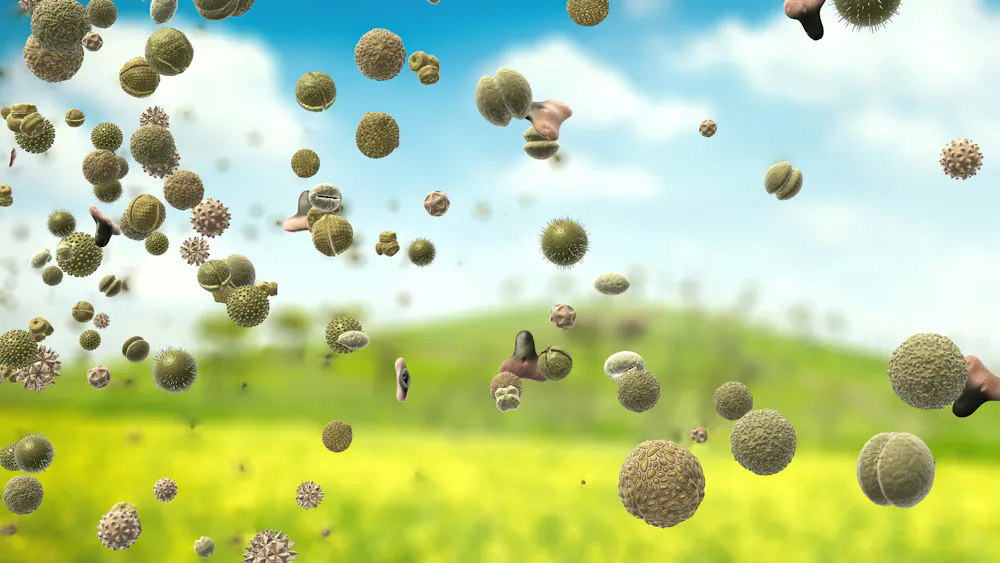
3-dimensional illustration of a variety of pollen grain types being transported through the air.Higher temperatures from climate change contribute to more pollen in the air for longer periods of time during pollen seasons

What we still don’t know


Despite the scale of the problem, there are no national systems in the U.S. to consistently measure and communicate pollen levels. Most communities lack reliable forecasts and alert systems that would allow vulnerable people to take precautions. This gap limits both prevention and research.


Our study focused on metropolitan areas where pollen and death counts were available, but we cannot yet generalize to rural areas. That is a concern because rural communities often face greater shortages in mental health care and pharmacy access – and have seen rising suicide rates over the past decade.


What’s next


For people who are already receiving mental health care, recognizing and treating seasonal allergies is a key part of self-care.


Over-the-counter medications can be highly effective at reducing symptoms.


More broadly, people should be aware that during peak allergy season, reduced alertness, sleep disruptions and mood fluctuations may place an increased burden on their mental health, in addition to the allergy symptoms.


In terms of policy, improving pollen monitoring and public communication could help people anticipate high-risk days. Such infrastructure would also support further research, particularly in rural areas where data is currently lacking. Our next step, supported by the American Foundation for Suicide Prevention, is to examine the impact of pollen on rural communities.


mountains, plateau, step, field, people, rice, nature, countryside, outdoors, agriculture https://standingabovethecrowd.com/james-donaldson-on-mental-health-seasonal-allergies-may-increase-suicide-risk/

Sunday, March 22, 2026


James Donaldson on Mental Health - Seasonal allergies may increase suicide risk:
by: Shooshan Danagoulian Associate Professor of Economics, Wayne State University, The Conversation

(The Conversation) – Seasonal allergies – triggered by pollen – appear to make deaths by suicide more likely. Our findings, published in the Journal of Health Economics, show that minor physical health conditions like mild seasonal allergies, previously thought not to be an immediate trigger of suicide, are indeed a risk factor.

To evaluate the link between seasonal allergies and suicide, my co-authors and I combined daily pollen measurements with daily suicide counts across 34 U.S. metropolitan areas.

Because both pollen and suicide are sensitive to weather conditions, we carefully accounted for temperature, rainfall and wind. We also controlled for differences in local climate and plant life, since pollen levels vary by region, and for seasonal averages that might otherwise obscure results. This allowed us to compare suicide counts on days with unexpectedly high pollen to days with little or none in the same county.

The results were striking. Relative to days with no or low levels of pollen, we found that deaths by suicide rose by 5.5% when pollen levels are moderate and 7.4% when levels are high. The increase was even larger among people with a known history of mental health conditions or treatment. We also showed that on high-pollen days, residents of affected areas experience more depressive symptoms and exhaustion.

Our analysis suggests that allergies exacerbate existing vulnerabilities, pushing some people toward crisis. We suspect that sleep disruption is the link between allergies and suicide rates.

Why it matters

More than 80 million Americans experience seasonal allergies each year.

Symptoms include sneezing, congestion, itchy eyes and scratchy throat. Most people experiencing these symptoms feel sluggish during the day and sleep poorly at night. Allergy sufferers might not realize, however, that these symptoms reduce alertness and cognitive functioning – some of the factors that can worsen mental health and increase vulnerability to suicidal thoughts and behaviors.

Suicide rates have been growing steadily in the past two decades, by 37% between 2000 and 2018. According to the Centers for Disease Control and Prevention, more than 49,000 Americans died by suicide in 2022, and over 616,000 visited emergency departments for self-harm injuries.

Although socioeconomic and demographic factors are the most important predictors of suicide, much less is known about its short-term triggers. Our study adds to growing evidence that the environment – including something as natural as pollen – can influence mental health risks.

This issue is likely to become more urgent as the climate changes. Rising temperatures lengthen pollen seasons and increase pollen volume. Over the past two decades, pollen seasons have grown in both intensity and duration, and projections suggest they will continue to worsen.

That means more people will experience stronger allergy symptoms, with ripple effects not only for physical health but also for sleep, mood and mental well-being.

#James Donaldson notes:Welcome to the “next chapter” of my life… being a voice and an advocate for #mentalhealthawarenessandsuicideprevention, especially pertaining to our younger generation of students and student-athletes.Getting men to speak up and reach out for help and assistance is one of my passions. Us men need to not suffer in silence or drown our sorrows in alcohol, hang out at bars and strip joints, or get involved with drug use.Having gone through a recent bout of #depression and #suicidalthoughts myself, I realize now, that I can make a huge difference in the lives of so many by sharing my story, and by sharing various resources I come across as I work in this space.  #http://bit.ly/JamesMentalHealthArticleFind out more about the work I do on my 501c3 non-profit foundationwebsite www.yourgiftoflife.org Order your copy of James Donaldson's latest book,#CelebratingYourGiftofLife: From The Verge of Suicide to a Life of Purpose and Joy

Click Here For More Information About James Donaldson

Higher temperatures from climate change contribute to more pollen in the air for longer periods of time during pollen seasons

What we still don’t know

Despite the scale of the problem, there are no national systems in the U.S. to consistently measure and communicate pollen levels. Most communities lack reliable forecasts and alert systems that would allow vulnerable people to take precautions. This gap limits both prevention and research.

Our study focused on metropolitan areas where pollen and death counts were available, but we cannot yet generalize to rural areas. That is a concern because rural communities often face greater shortages in mental health care and pharmacy access – and have seen rising suicide rates over the past decade.

What’s next

For people who are already receiving mental health care, recognizing and treating seasonal allergies is a key part of self-care.

Over-the-counter medications can be highly effective at reducing symptoms.

More broadly, people should be aware that during peak allergy season, reduced alertness, sleep disruptions and mood fluctuations may place an increased burden on their mental health, in addition to the allergy symptoms.

In terms of policy, improving pollen monitoring and public communication could help people anticipate high-risk days. Such infrastructure would also support further research, particularly in rural areas where data is currently lacking. Our next step, supported by the American Foundation for Suicide Prevention, is to examine the impact of pollen on rural communities. https://standingabovethecrowd.com/?p=15927

James Donaldson on Mental Health - There were times I wanted to give up. Here’s what I want you to know

James Donaldson on Mental Health - There were times I wanted to give up. Here’s what I want you to know

Trigger warning: Suicide and mental health issues
This article discusses suicide and mental health struggles. Please read with care. 


World Mental Health Day is a reminder that across the world, in homes and in workplaces, many carry pain in silence.


More than 1 billion people worldwide are living with mental health conditions, with anxiety and depression among the most common, affecting both men and women of all ages and income levels. Depression and other mental health conditions can lead to suicide.


Every year, suicide claims more than 720 000 lives worldwide ? the equivalent of the entire population of a large city. One in every four of these deaths happens in the Western Pacific Region. Behind these numbers are stories of quiet struggles, unspoken pain and moments when help could have made a difference.


Silence sometimes feels like an easier choice, but in reality, conversations can save lives. 


For Roy Wadia, Regional Communications Manager at the World Health Organization (WHO) Regional Office for the Western Pacific, the topic of suicide is deeply personal. His journey through grief and survival reveals why speaking openly matters more than ever. 


#James Donaldson notes:
Welcome to the “next chapter” of my life… being a voice and an advocate for #mentalhealthawarenessandsuicideprevention, especially pertaining to our younger generation of students and student-athletes.
Getting men to speak up and reach out for help and assistance is one of my passions. Us men need to not suffer in silence or drown our sorrows in alcohol, hang out at bars and strip joints, or get involved with drug use.
Having gone through a recent bout of #depression and #suicidalthoughts myself, I realize now, that I can make a huge difference in the lives of so many by sharing my story, and by sharing various resources I come across as I work in this space.
  #http://bit.ly/JamesMentalHealthArticle
Find out more about the work I do on my 501c3 non-profit foundation
website www.yourgiftoflife.org Order your copy of James Donaldson's latest book,
#CelebratingYourGiftofLife: From The Verge of Suicide to a Life of Purpose and Joy


Click Here For More Information About James Donaldson


The pain I saw in my family

Roy was a teenager when his uncle ended his life in Canada. After a painful divorce, his uncle had moved from city to city, his fortunes declining with each move. He grew suspicious of everyone, cut ties with his siblings and, one by one, drifted away from his remaining friends.


By the time his grown sons reached out to reconnect, it was too late. He left behind only a note to his mother asking for forgiveness and stating his wish to be “like an astronaut, in outer space”.


“The shock almost killed his mother ? my grandmother,” Roy shares. “ took a toll on my mother and her sisters... and it triggered his boys – both of whom had been brilliant students, hugely popular in school and university. They were diagnosed with various severe mental conditions.”


The pain did not end with his uncle’s death. Roy watched it ripple through his family. One of his uncle’s sons eventually died by suicide. His other son tried to take his own life and spent years in and out of care. Today, he lives in a halfway house. Their mother lives in seclusion, shattered by one compounded tragedy after another.


The pain I carried myself

Years later, tragedy struck again. Roy’s younger brother, Riyad ? a filmmaker and LGBTQI+ activist ? died of AIDS after refusing treatment. For Roy, the grief he felt was suffocating.


“I began to wish for death to swallow me as well,” Roy says. “I wasn’t actively suicidal, but yes, I did harbour thoughts of being in spirit – no longer in this world.”


Three weeks after Riyad’s death, and quite by chance, Roy joined the WHO country office in China as a communications officer. There ? almost as if by design ? his very first assignment was on HIV/AIDS.


The work gave him purpose by day, but grief consumed him at night.


“I’d cry myself to sleep… until I was literally guided out of my grief by a Chinese therapist... If I hadn’t received the unexpected intervention of Professor Chen, who diagnosed me with ‘acute grief and anger’ bottled up along my spine and impacting my heart as she put it, I’m not sure I would have survived or emerged from that dark place.”


When I needed to talk but couldn’t

Even when we want help, words can feel impossible.


“I felt paralyzed with grief – couldn’t express it openly, and yet desperately wanted someone to ask me how I was and what I needed, even though I’m not sure I could have expressed what that was,” Roy reflected. “I had colleagues who were supportive as they knew of my brother’s death, but it’s difficult for folks to ask the right questions – either they feel awkward or perhaps feel one shouldn’t ‘indulge’ grief and that it will heal itself.”


To this day, conversations about suicide remain rare. Fear ? of stigma, judgement or “burdening” others ? keeps many people silent.


“It’s difficult for the person undergoing this experience to reach out to loved ones – I felt I simply couldn’t talk to my parents as they were experiencing grief as well, and I felt I couldn’t talk to my then partner ? now husband ? as he was half a world away and I didn’t want to worry him about my well-being.”


What I want to tell you now

Roy has a message for anyone standing at the edge: 


Please remember you’re not alone...Try to be open to receiving the assistance you need – and know there’s absolutely no shame in asking for, and getting, that help.


“It sounds clichéd, but really, I’d say please remember you’re not alone. There are others who’ve gone through what you have – even though you may find that hard to believe at that exact moment. Try to be open to receiving the assistance you need – and know there’s absolutely no shame in asking for, and getting, that help.“


This is why conversations are critical. Reaching out opens space for understanding and support, which often eases the pain that silence deepens.


What help looks like

Talking about suicide doesn’t cause it. Not talking about it might.


Support can begin with something as simple as noticing when someone seems to be struggling and asking how they are doing. It doesn’t take much to make a call, send a message or just sit quietly with someone. What matters most is approaching with compassion, without judgement. Listening with patience matters more than finding the perfect words. Encouraging professional help in a gentle, supportive way is equally important.


If you or someone you know is struggling, remember you don’t have to go through it alone. Talk to people you trust. Reach out to a mental health professional, counsellor or social worker. Join a support group. If you need immediate help, contact emergency services or a crisis hotline.


https://standingabovethecrowd.com/james-donaldson-on-mental-health-there-were-times-i-wanted-to-give-up-heres-what-i-want-you-to-know/